By Bridget Kakuwa[i], Benjamin Abugri [ii]& Molalet Tsedeke [iii]
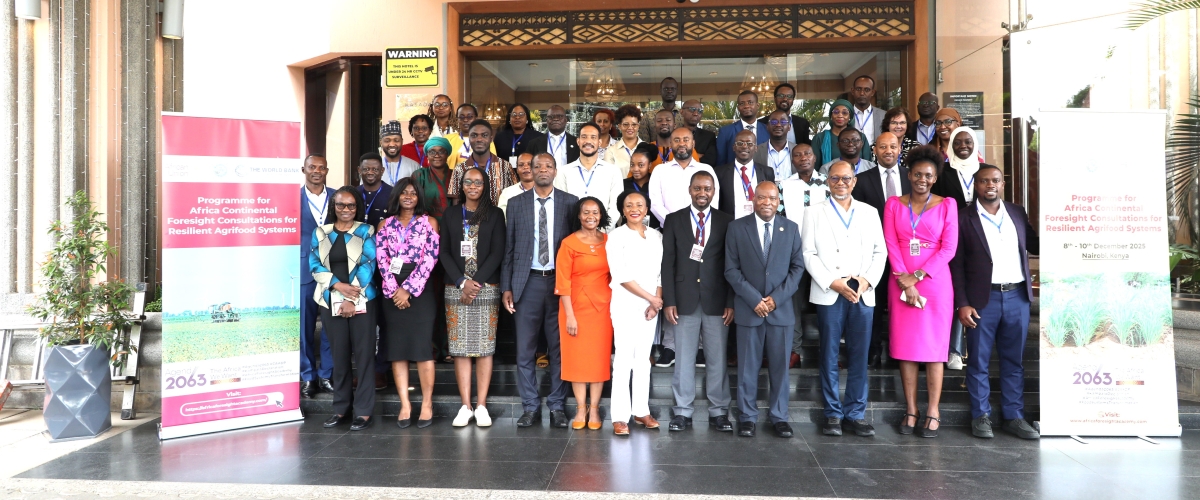
Africa has taken a decisive step toward strengthening the resilience and long-term sustainability of its agrifood systems with the official opening of the Africa Continental Foresight Consultations for Resilient Agrifood Systems in Nairobi. The high-level consultations convened policymakers, researchers, development partners, and practitioners from across the continent to advance foresight as a core instrument for anticipatory governance, evidence-based planning, and resilient investment decision-making.
In his opening remarks, the representative of the leadership of the Ministry of Agriculture and Livestock Development/State Department of Agriculture (MOALD/SDA) Dr Peter Orangi welcomed delegates from the African Union Commission (AUC), the Forum for Agricultural Research in Africa (FARA), the Consultative Group on International Agricultural Research (CGIAR), sub-regional organisations, universities, and Member States. He observed that the consultations were taking place at a pivotal moment for Africa’s agrifood systems, which are being shaped by climate change, demographic pressures, market volatility, and environmental degradation. He stressed that continental frameworks such as the Kampala CAADP Declaration, Agenda 2063, the African Continental Free Trade Area (AfCFTA), and the Food Systems Resilience Programme provide a solid foundation for anticipatory and inclusive decision-making, noting that “foresight equips Africa to shape its agrifood future rather than be shaped by it.”
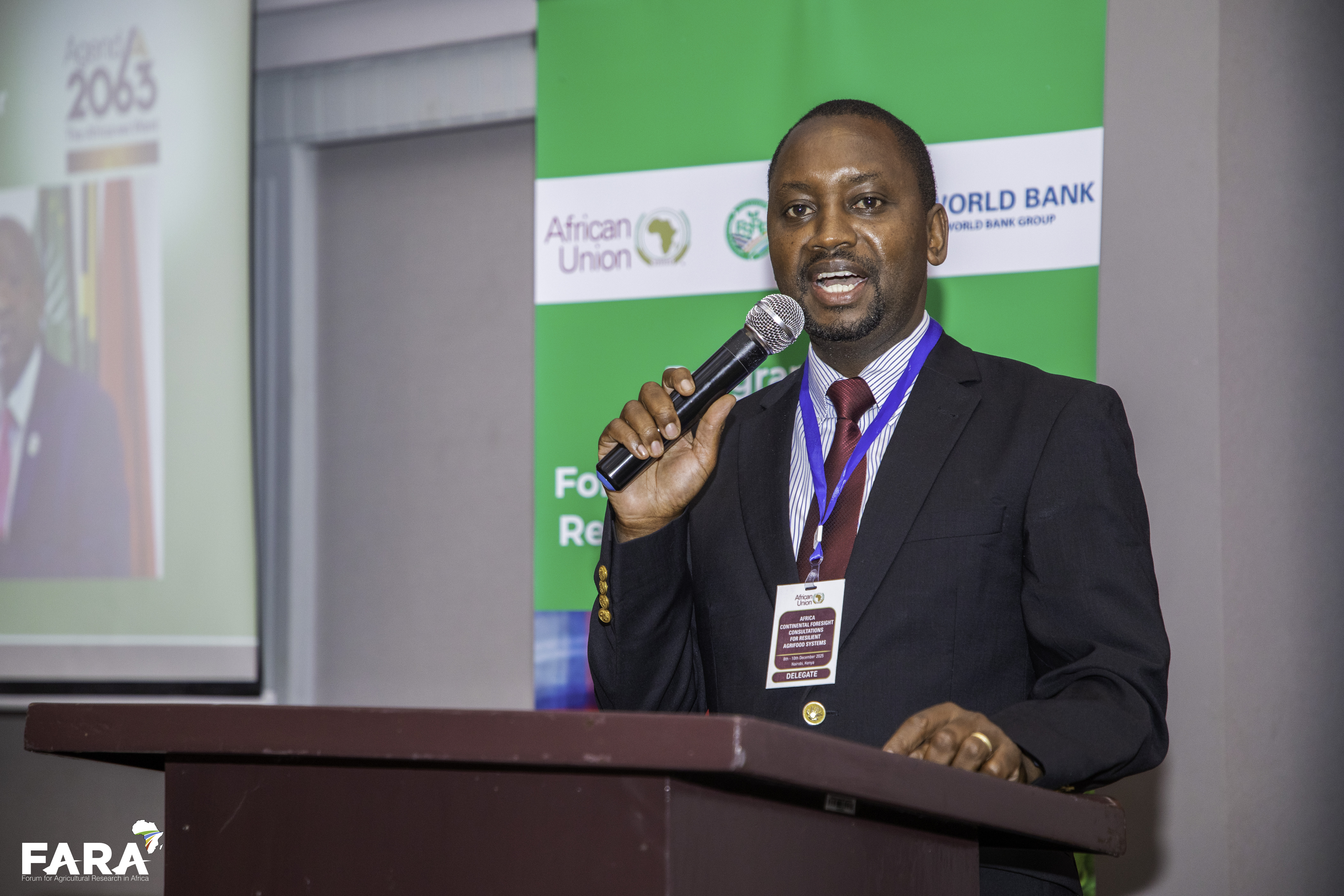
Dr. Peter Orangi- Ministry of Agriculture and Livestock Development/State Department of Agriculture (MOALD/SDA)
Officially opening the consultations, H.E. Moses Vilakati, African Union Commissioner for Agriculture, Rural Development, Blue Economy and Sustainable Environment, underscored that foresight is no longer optional in a context defined by climate shocks, volatile food and input prices, rapid technological change, and geopolitical and public health risks. He noted that the consultations directly advance the aspirations of Agenda 2063 and give practical effect to the Kampala CAADP Declaration and the CAADP Strategy and Action Plan 2026–2035, which recognise that Africa’s agrifood systems are being reshaped by demographic change, urbanisation, shifting diets, climate variability, and deeper regional integration. He further highlighted the alignment of the consultations with Phase 3 of the Food Systems Resilience Programme, which calls for strengthened forecasting, reduced response times between early warning and action, and improved institutional arrangements for preparedness across the continent.
H.E Vilakati stated that the wide range of institutions represented, from Member States and RECs to research organisations, farmer organisations, women’s and youth networks, and development partners, demonstrated a shared commitment to strengthening preparedness and long-term resilience across Africa’s agrifood systems. He emphasised that the consultations marked the beginning of a more structured and institutionalised continental engagement on foresight, which the African Union intends to embed as a standard instrument within its policy and planning systems.
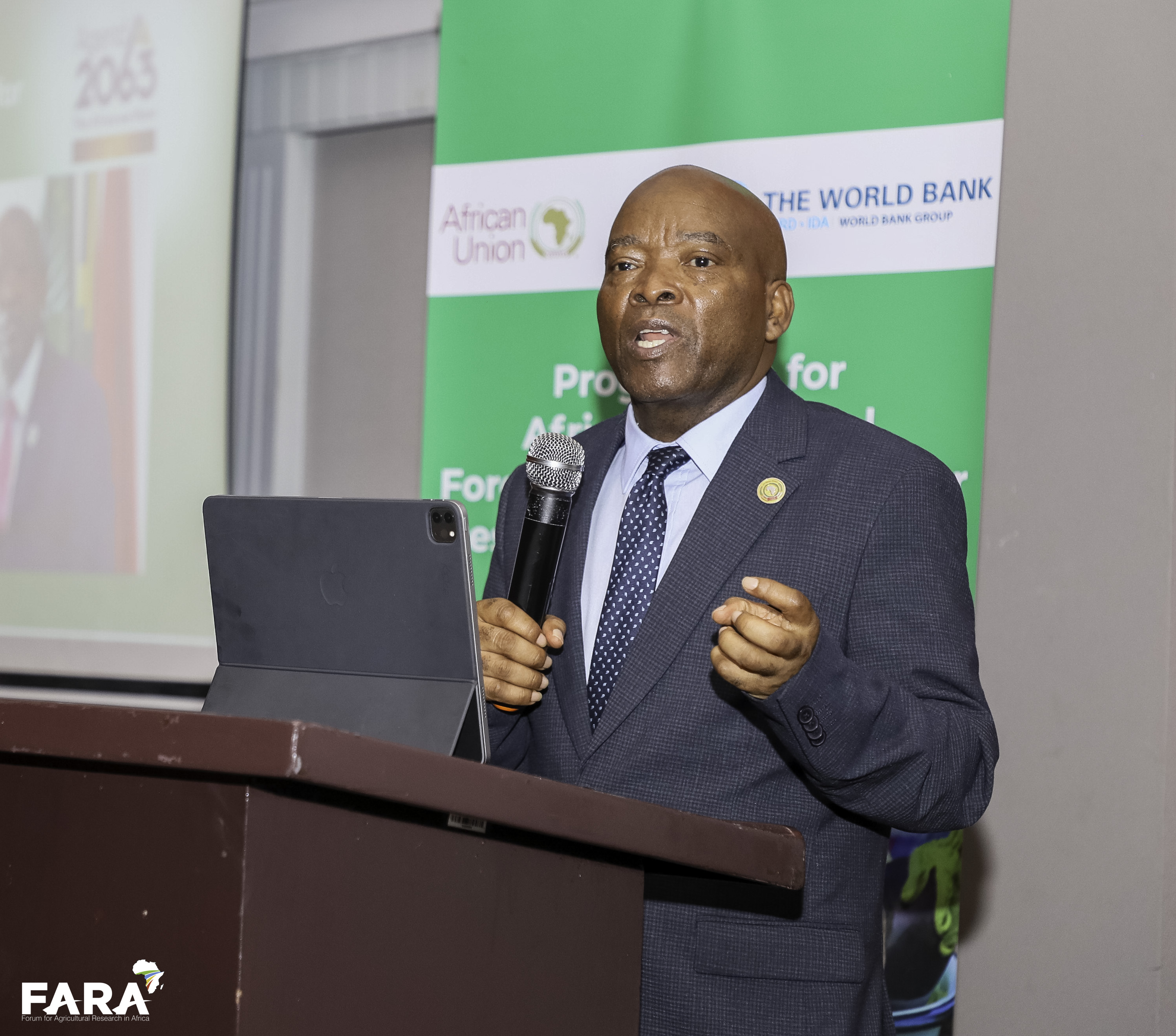
H.E. Moses Vilakati, African Union Commissioner -(AUC-ARBE)
H.E. Vilakati outlined five key policy directions that, in my view, should shape the continental framework and roadmap for foresight in Africa’s agrifood systems. First is the institutionalization of foresight within AU, REC, and national systems, including accountability frameworks, clear responsibilities, predictable resources, and regular reporting; secondly, the integration of foresight into CAADP, climate, and food systems agenda, emphasizing that foresight must inform the next generation of CAADP investment plans, climate adaptation strategies, food systems pathways, and trade and market policies; third is the strengthening of data, analytics, and capacities across the continent, ensuring that high-quality foresight depends on timely data, robust analytical tools, and skilled practitioners; fourth is to deliberately elevate community, youth, and gender-responsive perspectives where the foresight architecture formally recognizes and indigenous and community-based knowledge systems; and finally, requesting the linkage of foresight to concrete financing and accountability mechanisms, emphasizing that real value only occur when it lead to action.
Contributing to the technical dialogue, Dr Namukolo Covic emphasised that foresight should be fully embedded in policy and investment processes rather than treated as a parallel activity. “Foresight is not an extra layer of work; it is an additional capability that helps us implement the FSRP and CAADP more effectively,” she said. She highlighted that foresight analysis allows policymakers to understand trade-offs and accelerate progress toward food security and equity, adding, “We must ask whether growth in production alone is enough, or whether everyone is truly accessing sufficient and nutritious food.”
The discussions also highlighted that Africa possesses strong, forward-looking policy instruments, but faces challenges in implementing and coordinating them. Dr Godfrey Bahigwa, former Director of Agriculture and Rural Development at AUC, noted that foresight supports better country-level choices based on comparative advantage. “The purpose of foresight is to help countries make informed choices, what food systems should be prioritised, and how resilience can be built around them,” he said, citing examples such as meat production in Kenya and fruit value chains in Ethiopia. He also cited CCARDESA and IGAD as instruments through which the World Bank appointed to implement FSRP.
Climate and environmental considerations featured prominently throughout the consultations. Several speakers warned that failure to align food systems within planetary boundaries would deepen climate and ecological risks. “If we do not sustain our food systems within planetary boundaries, we expose ourselves to even greater climate challenges,” one panellist cautioned, emphasising the need for foresight-driven innovation and, where necessary, disruptive approaches to food systems transformation.
A high-level panel discussion featuring Julius Gatune, Olugbenga Adesida, Geci Karuki-Sebina, and Wangeci Gitata-Kiriga underscored foresight as a systematic capability that goes beyond forecasting. Panellists highlighted that foresight requires mindset shifts, systems thinking, and institutional capacity to navigate complexity. “Foresight is not just about predicting the future; it is about building the capability to think differently and act under uncertainty,” one panellist remarked. Youth and intergenerational perspectives were also emphasised, with calls for more participatory and anticipatory approaches that consider the needs of future generations.
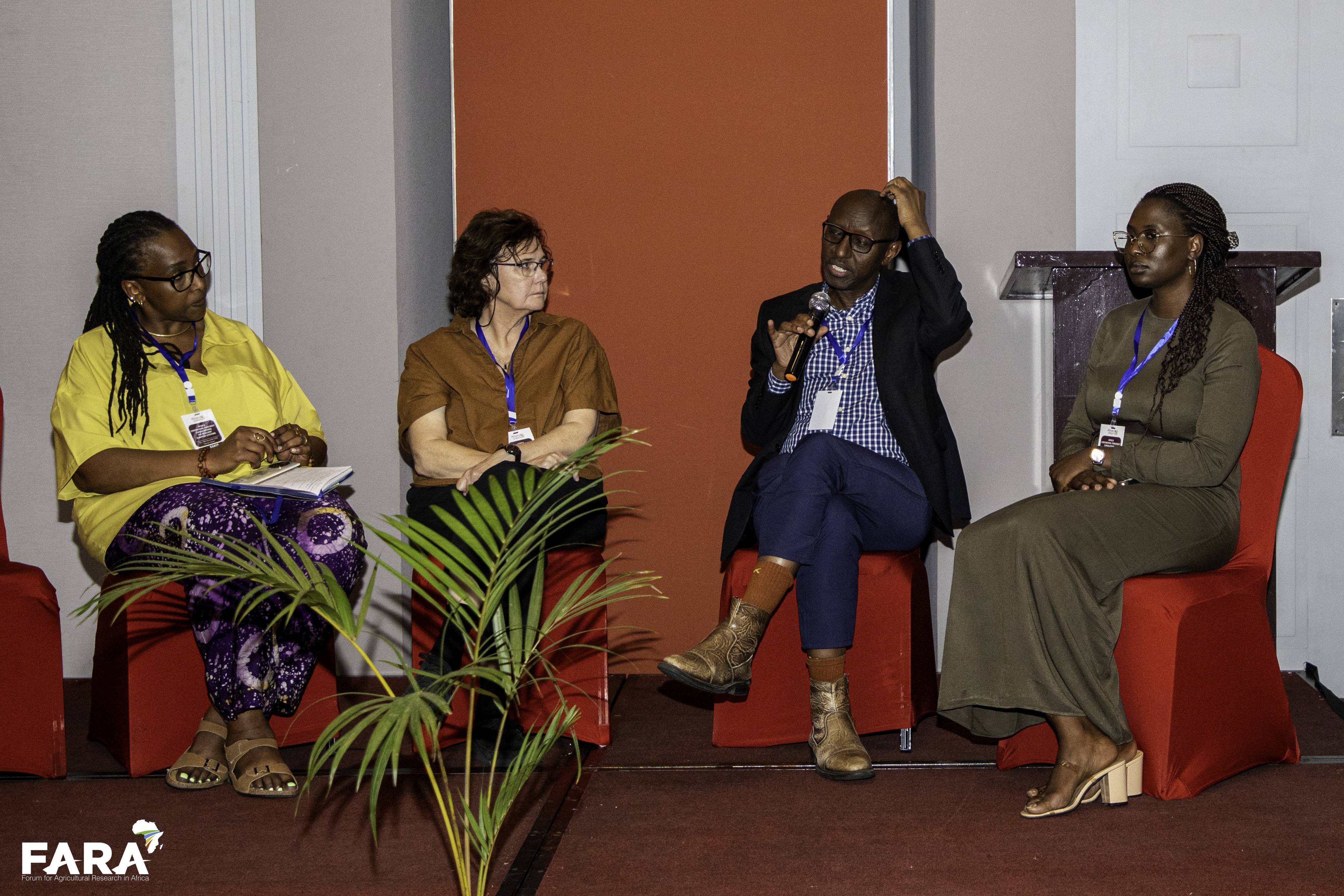
As the consultations drew to a close, participants agreed on a set of concrete outcomes to anchor foresight within Africa’s agrifood governance systems, supported by strengthened knowledge management and policy integration processes. Through thematic working groups on early warning and analytical systems, anticipatory governance, research alignment and capacity mapping, policy integration and knowledge uptake, and inclusive and gender-responsive foresight governance, delegates produced practical outputs including draft continental foresight frameworks, policy guidance templates, institutional readiness matrices, governance schematics, and a phased roadmap for embedding foresight into planning, budgeting, monitoring, and accountability processes at African Union, Regional Economic Community, and national levels.
Strong emphasis was placed on robust knowledge management systems to ensure that foresight evidence is systematically captured, translated, communicated, and reused through policy briefs, dashboards, learning platforms, and communities of practice, thereby strengthening uptake by policymakers and practitioners. Participants also underscored the integration of knowledge systems, community-based early warning mechanisms, and the voices of women and youth to ensure foresight approaches were people-centred and context-specific. The consultations culminated in an actionable continental roadmap aligned with the Food Systems Resilience Programme, the Kampala CAADP Declaration, and Agenda 2063, strengthening forecasting and analytics capacities, reducing the time between early warning and response, and ensuring that foresight meaningfully informed policy choices, investment decisions, and long-term resilience-building efforts across Africa’s agrifood systems.
Dr Abdulrazak Ibrahim, Institutional Capacity and Futures cluster Lead Specialist at FARA, subsequently outlined the key deliverables of the consultations and their proposed implementation pathways, noting that these outputs are intended to drive practical transformation and long-term resilience across Africa’s agrifood systems.
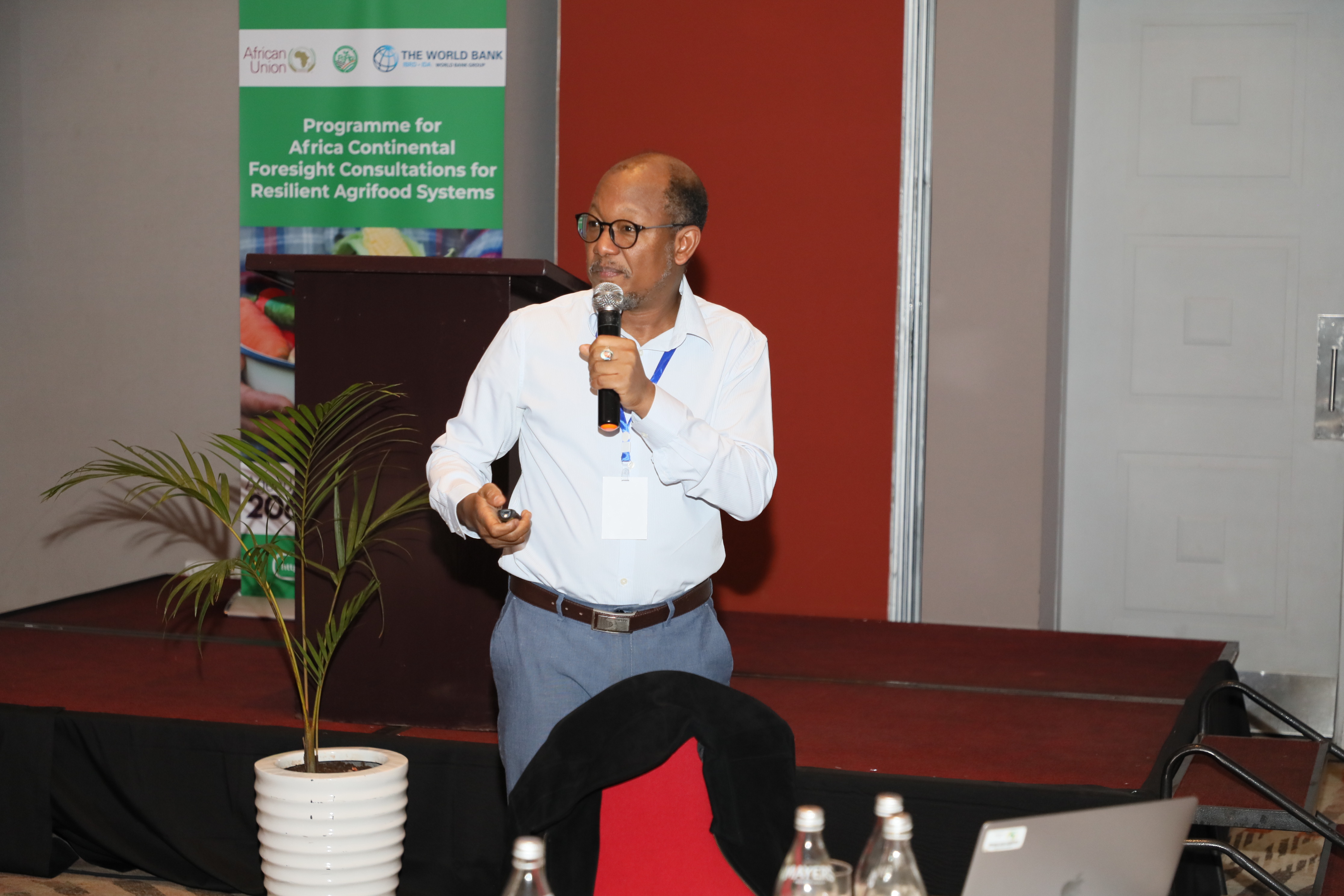
Dr. Abdulrazak Ibrahim, Institutional Capacity & Foresight Cluster Lead, FARA
In closing, Ms Beatrice Egulu thanked all delegates for their commitment and active participation, urging them to remain engaged beyond the consultations to promote continuous cross-learning and knowledge exchange across institutions and countries. She emphasised that sustained collaboration would be essential for translating foresight insights into action.
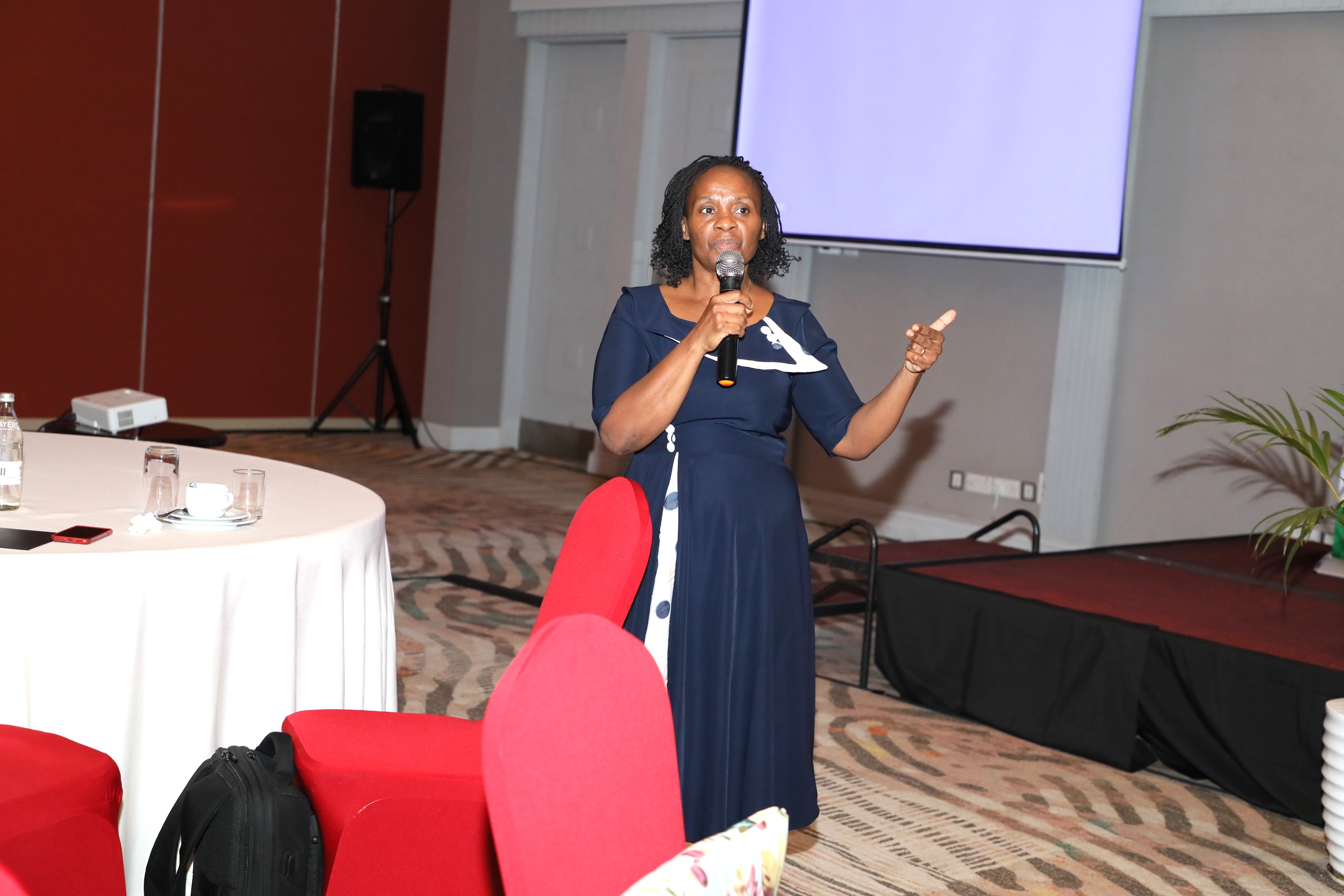
Ms. Beatrice Egulu, Policy Officer, AUC-ARBE
Overall, the Africa Continental Foresight Consultations reaffirmed a shared commitment to institutionalising foresight across continental, regional, and national levels. Participants expressed confidence that the outcomes of the Nairobi meeting, including draft frameworks, governance models, and a continental roadmap, will strengthen Africa’s capacity to anticipate change, manage shocks, and deliver resilient, inclusive, and sustainable agrifood systems for present and future generations.
[i] Dr Bridget Kakuwa is the Information Communication & Knowledge Management Manager at the Center for Coordination of Agricultural Research and Development for Southern Africa (CCARDESA)
[ii] Mr Benjamin Abugri is Knowledge Management, Digitalization, and Learning Cluster Lead Specialist at the Forum for Agricultural Research in Africa (FARA)
[iii] Mr Molalet Tsedeke is Media Liaison and media center officer at the Information and Communication Directorate of the African Union Commission