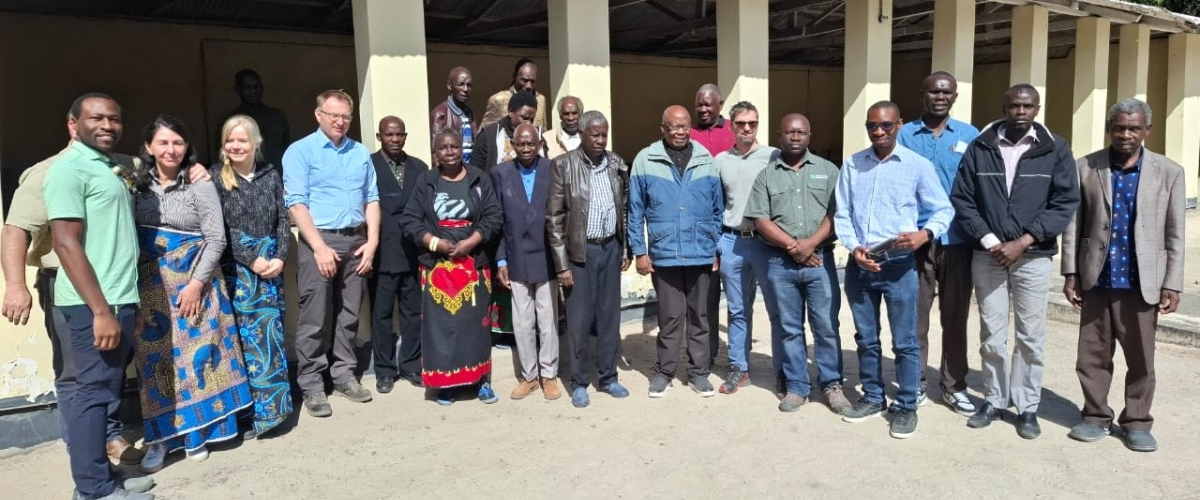
In the wake of the 15th Conference of Parties (COP15) to the Ramsar Convention in Victoria Falls, Zimbabwe, which took place from 23rd to 31st July, a high-ranking German delegation visited the IKI financed Growing Greener Project: Restoration and sustainable management of agropastoral systems in open arid landscapes across Southern Africa.
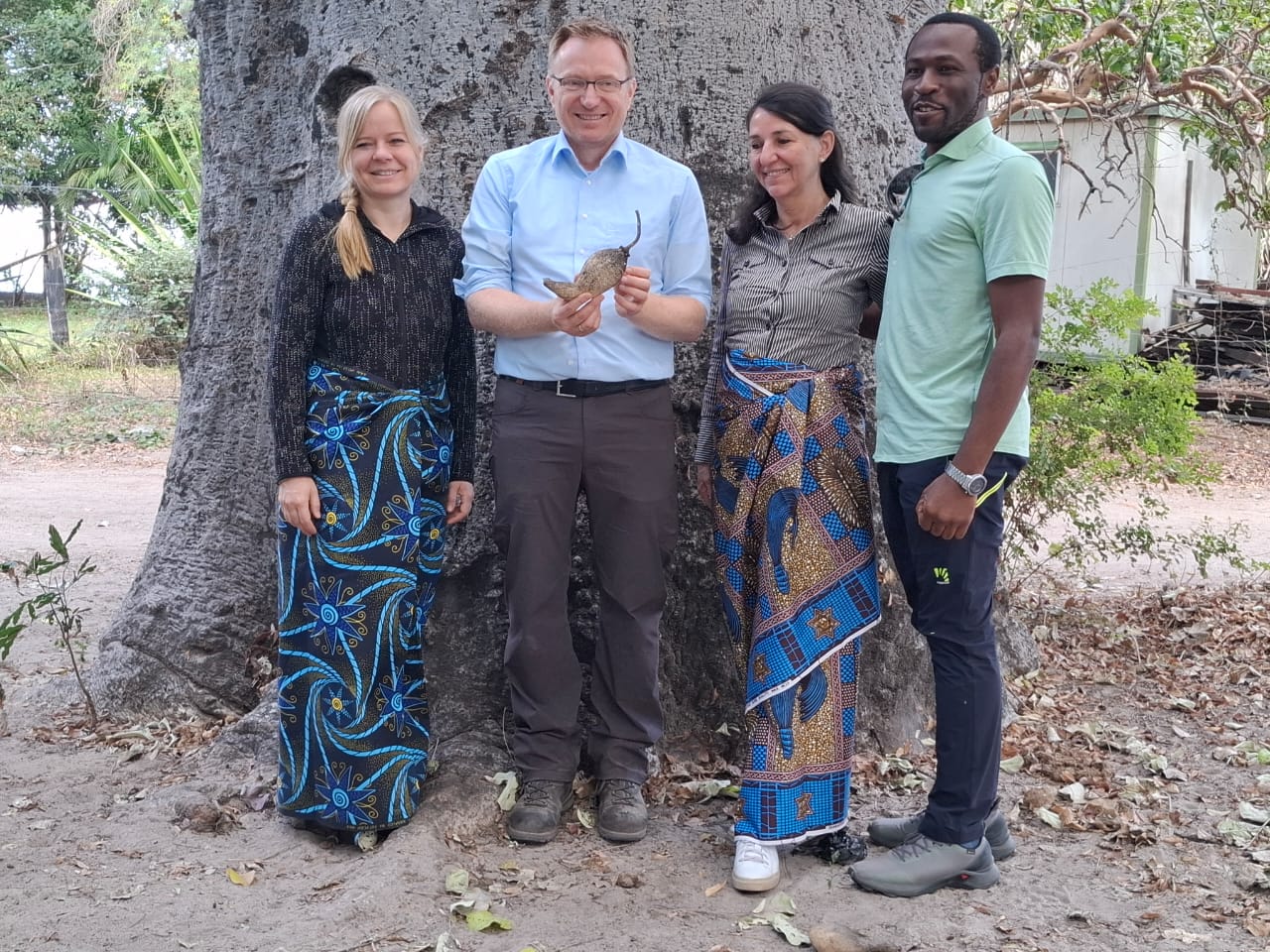
Underlining the theme of COP15 – “Protecting Wetlands for Our Common Future”, the German delegation, comprised the Director General for Nature Conservation, Sustainable Use of Nature and Natural Climate Protection at the Federal Ministry for the Environment, Climate Action, Nature Conservation and Nuclear Safety (BMUKN), Dr. Jochen Gebauer, the Head of Division for International Cooperation on Biodiversity at the BMUKN, Ms. Verena Klinger-Dering, Policy Officer for International Cooperation on Biodiversity, Dr. Alban Kisife, and Head of Division for International Nature Conservation at the Federal Agency for Nature Conservation, Dr. Kim Grützmacher. The delegation decided to visit the ongoing community efforts in the Simalaha Community Conservancy (SCC), located on the floodplains of the mighty Zambezi River in the Western Province of Zambia.
The Simalaha Community Conservancy is pioneering a community-owned and community-driven conservation project, which seeks to harmonize local economic livelihoods with environmental sustainability. The conservancy is co-managed by Peace Parks Foundation (PPF), a conservation NGO based in South Africa and implementation partner under the Growing Greener project. Herding for Health (H4H) is a livestock management model that promotes planned grazing and resting intervals, professional herding of sheep, goats and cattle in combination with value-chain developments. Through planned and rotational grazing, communal rangelands are allowed to recover and thrive, leading to restoration and sustainable use. This not only benefits the ecosystem but also improves the livelihoods of local herders and livestock owners through value chain development, including better market access for livestock products.
The primary environmental goal of the project is to restore and manage more than 100,000 hectares of grassland sustainably through H4H which will also help to sequester over 35,000 tonnes of greenhouse gases across the ten villages in the Simalaha Community Conservancy. This aligns with global efforts to mitigate emissions and contribute to climate change resilience. The innovative grazing system helps to restore degraded rangelands, while promoting sustainable grazing practices and community-based land management, thus revitalizing local ecosystems and reducing desertification, all which are critical issues in the landscape.
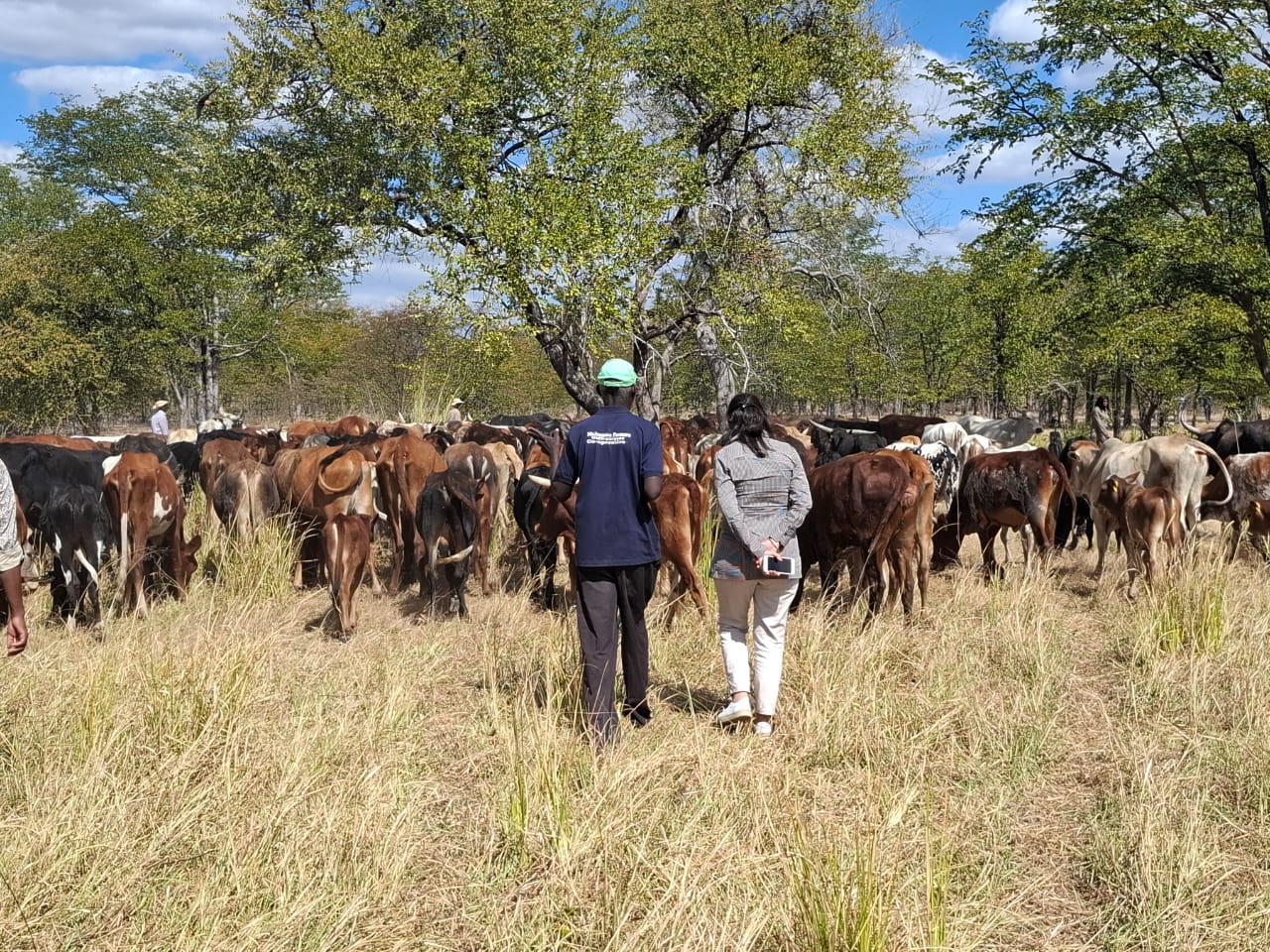
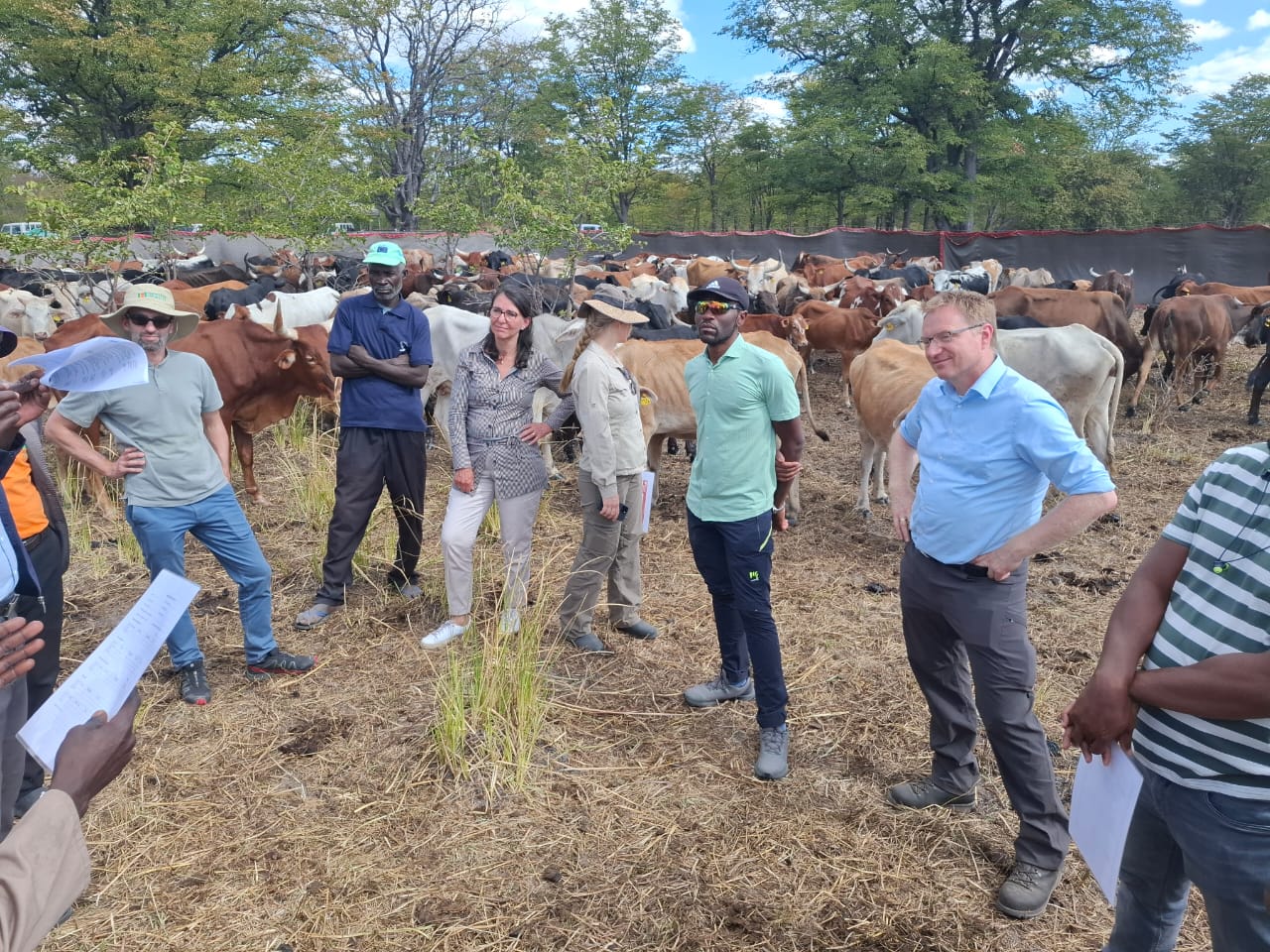
The project visit included discussions on the H4H model with the traditional leadership, the Mwandi Kuta (royal court), women cooperatives, the grazing area committee and the professional herders, also called eco-rangers. The German delegation learnt about the livelihood aspects as well as ecological impacts of the H4H-model practiced in Simalaha. These discussions offered valuable insights into how the project is impacting lives in the conservancy.
One of the highlights of the day was when the delegation took on a herd of 215 cattle and ushered them back across the open grassland into the night enclosure or boma. It was inspiring to see the herders confidently showcase their skills and explain how they care for the animals. Their deep understanding of livestock and the land is a clear sign that knowledge transfer is working and that the community is truly leading this change.
Dr. Jochen Gebauer commended the impressive efforts being made to restore degraded rangelands, while noting that the envisaged results will take time to materialize and reassuring the BMUKNs support in this endeavor. He particularly applauded the strong emphasis on sustainability embedded within the project, noting that the community is at the center of the project. "It is encouraging to see that even beyond the life of the programme, the community of Simalaha is positioned to sustain these gains," he remarked. He further observed that “even without external funding, the cooperatives are ready to continue. That’s the kind of ownership and resilience we strive for."
Ms Verena Klinger-Dering expressed keen interest in the gender component of the programme and was impressed by the intentional inclusion of women in rangeland restoration activities. She said "Women are at the core of sustainable development. When women are actively involved and empowered, entire communities thrive. Management of conservation activities in the hands of women transforms families, restores dignity, and secures a more resilient future for all."
Adding his voice to the conversation, Dr. Alban Kisife, stated that “We were particularly impressed by how pest and disease control, especially foot and mouth disease, is being tackled in a holistic way — linking animal health to rangeland restoration and community wellbeing.
"The project is part of a larger regional IKI project “Growing Greener - Restoration and sustainable management of agropastoral systems in open arid landscapes across Southern Africa” which spans four countries in Southern Africa. The project employs the H4H open rangeland restoration model. This model aims to restore ecological balance while promoting sustainable livelihoods for pastoral communities. The IKI project is implemented in Botswana, Madagascar, South Africa and Zambia. It is implemented by GIZ, Conservation International (CI), Peace Parks Foundation (PPF) and the Centre for Coordination of Agricultural Research and Development for Southern Africa (CCARDESA).
The visit from the BMUKN highlights the growing international collaboration in addressing environmental challenges, particularly the need to protect pastures and rangelands which are vital for both biodiversity and climate action. Through initiatives such as the IKI Growing Greener Project, Zambia contributes to global efforts to restore and protect essential ecosystems for both people and nature. Collaboration between local communities, international NGOs, and government agencies highlights the importance of cooperation in addressing complex socioeconomic and environmental challenges.
The visit not only reinforced the importance of integrating conservation with local development but also highlighted the potential for stronger international cooperation. By witnessing the impact of H4H in Zambia firsthand, the German delegation was able to understand how such initiatives can be scaled up and replicated in other regions facing similar environmental challenges. Ongoing collaboration between the German government, Zambian authorities, and international conservation organizations will be crucial in advancing the shared goals of biodiversity conservation, climate action, and sustainable land management. The IKI Growing Greener Project is a testament to the power of community-driven conservation and the essential role that local knowledge and participation play in the success of global environmental efforts.
More information: