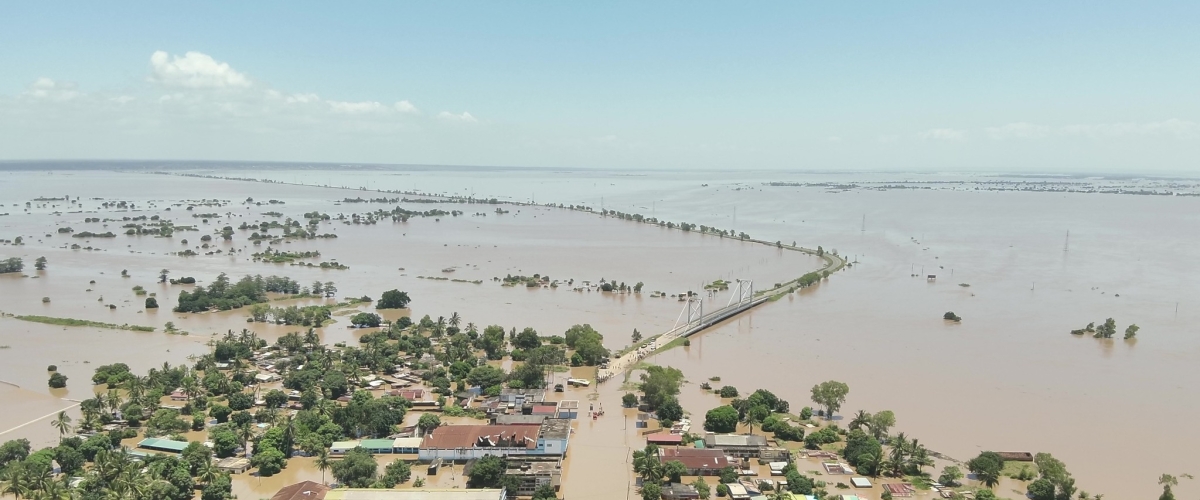
Photo by INGD Mozambique
Southern Africa is confronted by an escalating climate disaster as exceptional rainfall and flooding swept across Mozambique and parts of South Africa and Zimbabwe, leaving hundreds of thousands of people displaced, crops destroyed and communities struggling to secure basic needs.
In Mozambique, the country most severely affected, floodwaters have inundated large parts of southern and central provinces, washing away homes, roads and farmland at a critical point in the agricultural calendar. National authorities and humanitarian agencies report that more than 700,000 people have been affected by the floods, with water displacing families, cutting supply routes and overwhelming basic services. Central and southern parts of Gaza province alone are reported to be nearly 40 percent under water, and people in the entire districts east of the Limpopo River have been forced to evacuate to higher ground.
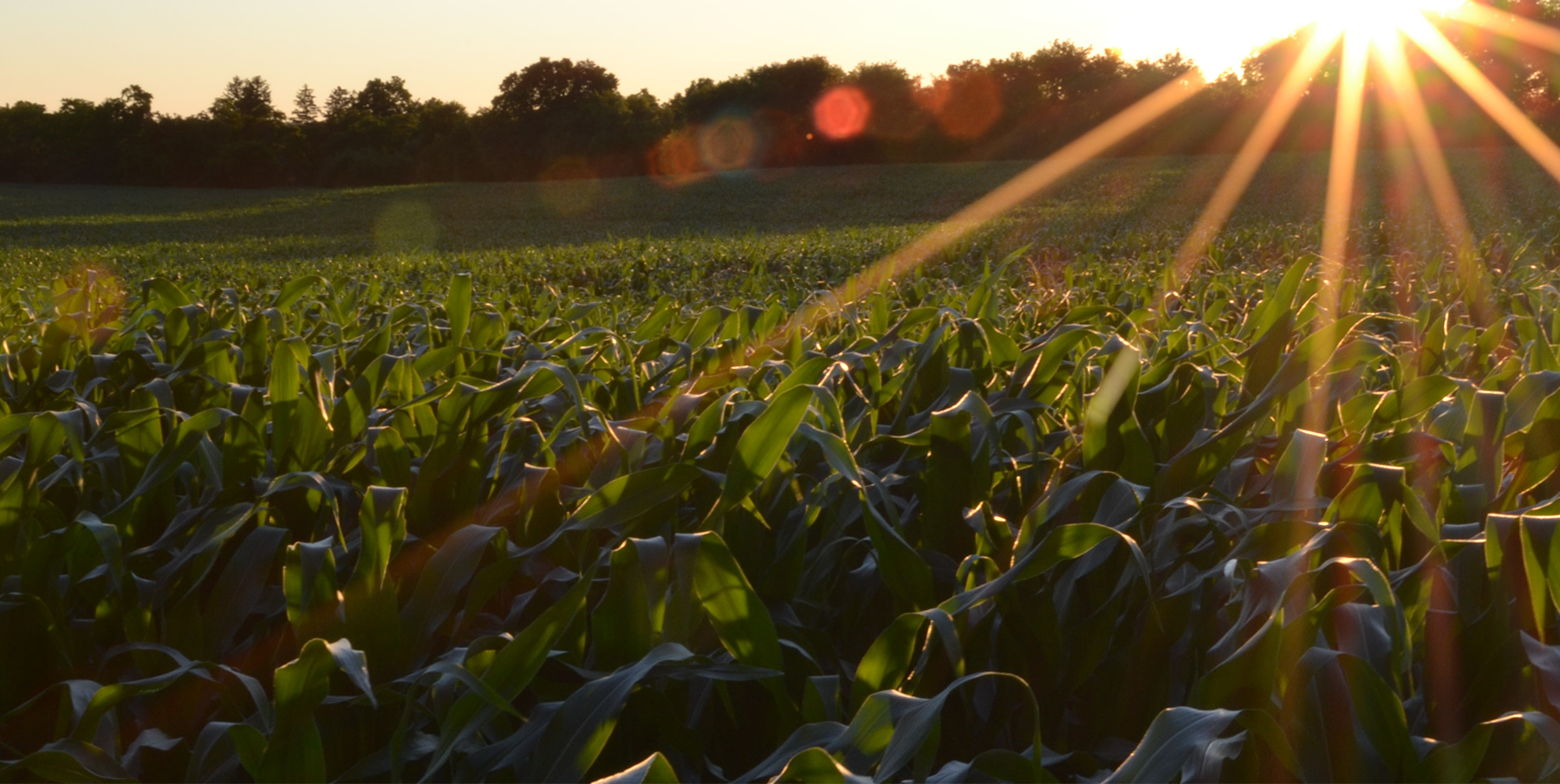
The impact on agriculture has been severe. Government and humanitarian assessments show that well over 180,000 hectares of crops have been destroyed and tens of thousands of livestock have been lost to rising waters. These losses erode both current food availability and longer-term rural livelihoods, creating acute risks for household food security and economic stability.
Across the border in South Africa, prolonged downpours and saturated rivers have also taken a heavy toll. Authorities reported dozens of deaths linked to flooding in provinces such as Limpopo and Mpumalanga, where tens of thousands of residents were evacuated and infrastructure damaged, prompting the government of South Africa to declare a national disaster. Rescue operations by the South African Air Force and other emergency services have assisted hundreds of stranded people, and specialist rescue teams from South Africa have been deployed to assist neighbouring Mozambique with swift water and aviation rescue capacity.
In Zimbabwe, heavy rains and swollen rivers have led to at least dozens of fatalities, widespread displacement and destruction of homes and roads. Rural districts in low-lying areas experienced severe flooding that disrupted local markets, impeded movement and heightened concerns for rising food insecurity during what should have been a productive agricultural season.
Beyond direct impacts on people and livestock, the floods have placed intense strain on health and social services across the region. Temporary accommodation centres are struggling to meet basic needs, safe water is scarce, sanitation systems are compromised and outbreaks of disease are increasing the urgency of humanitarian action. The convergence of food system disruption, displacement and weakened health infrastructure presents a serious and compounding threat to the wellbeing of children, elderly people and other vulnerable groups.
The Southern African Development Community (SADC) has mobilised a regional response, deploying emergency coordination teams and working with humanitarian partners to support national responses and help channel search-and-rescue, relief supplies and technical support where they are needed most. Evacuation efforts, regional rescue deployments and coordinated assessments underscore how shared climate risks are prompting deeper cross-border cooperation.
While immediate humanitarian aid remains critical, the scale of destruction and loss across these three countries reveals deeper structural vulnerabilities within regional food systems. Repeated exposure to climate extremes impairs the ability of smallholder farmers and rural communities to sustain production, access markets and recover after shocks. Strengthened investments in resilient agriculture, early warning systems and disaster risk management across the Southern African region will be essential to reduce future risks and protect lives and livelihoods.
As waters slowly begin to recede in some areas, the long road to recovery is already underway. Restoring agricultural production, repairing infrastructure and rebuilding resilient communities will be vital to address not only the immediate crisis but also the mounting climate threats facing Southern Africa’s food systems in the years ahead.
Sources
Flood Impacts and Regional Context
- https://www.africanews.com/2026/01/25/more-than-640000-people-affected-by-catastrophic-mozambique-floods/
- https://reliefweb.int/report/mozambique/mozambique-floods-health-cluster-situation-report-1-23-january-2026
- https://www.unocha.org/publications/report/mozambique/mozambique-floods-hnrp-addendum-covering-period-january-june-2026-issue-january-2026
- https://www.acaps.org/fileadmin/Data_Product/Main_media/20262501_Mozambique_Impact_of_flooding_in_Gaza_Maputo_Niassa_Sofala_and_Zambezia_provinces.pdf
Regional Flood Effects and Response
- https://reliefweb.int/report/mozambique/mozambique-south-africa-zimbabwe-severe-weather-and-floods-update-ingd-copernicus-emsr-noaa-southern-africa-media-echo-daily-flash-19-january-2026
- https://www.africanews.com/2026/01/20/death-toll-from-floods-in-mozambique-and-south-africa-continues-to-climb/
- https://www.iol.co.za/news/weather/2026-01-22-rescue-south-africa-sends-rescue-team-to-mozambique-amid-devastating-floods/
- https://www.unocha.org/publications/report/southern-africa-heavy-rains-and-floods-flash-update-no-1