This practical framework helped livestock owners understand how the Herding for Health approach could improve the productivity of their Zebu cattle, restore degraded rangelands and strengthen their livelihoods. After three days of community discussions and practical learning, the community accepted the approach and developed an action plan to guide its implementation.
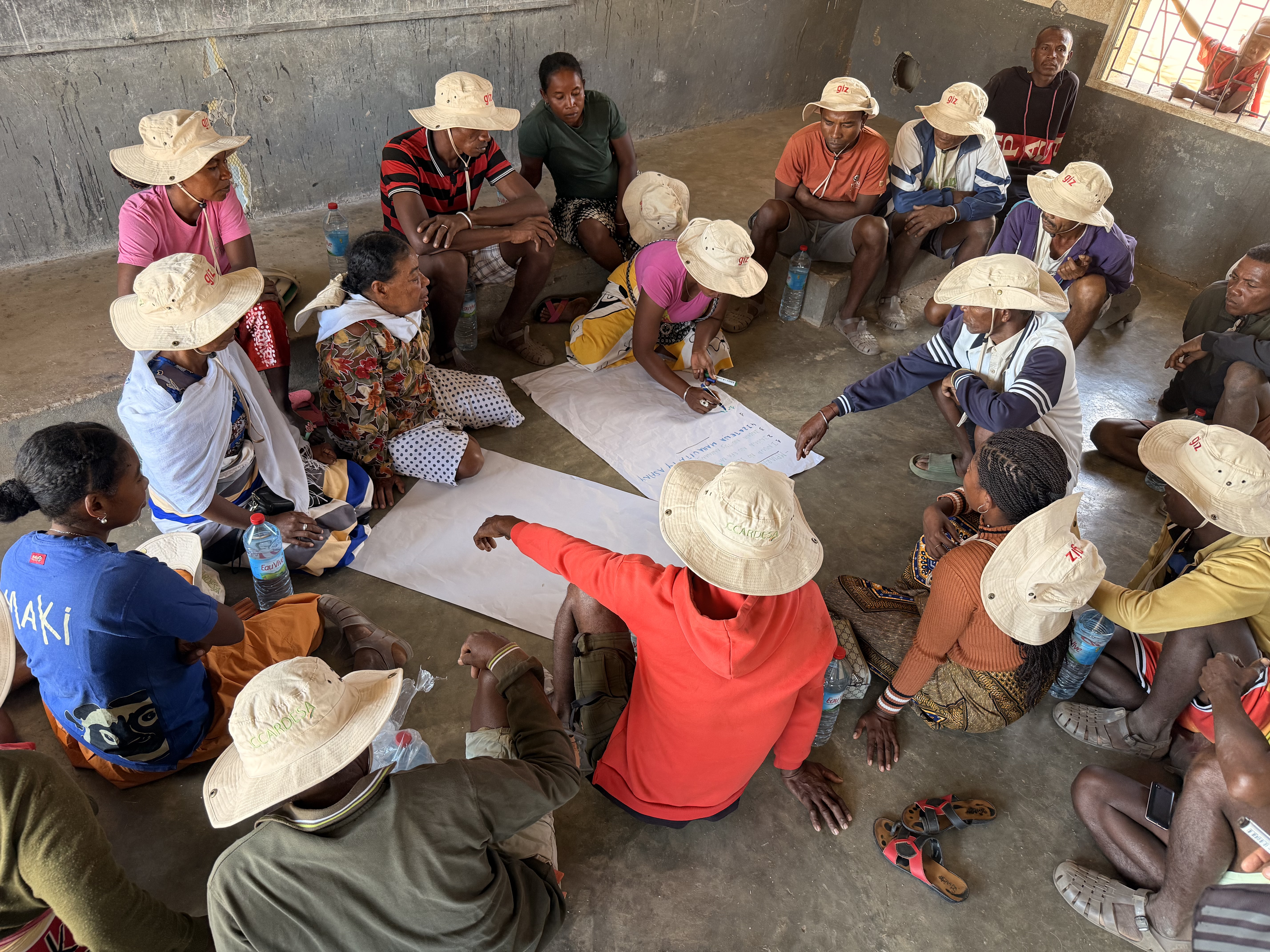
The field programme, held from 23 to 25 September 2026, formed part of the National Training Workshop on Livestock and Land Management organised CCARDESA, under its role in coordinating Work Package 4 of the IKI Growing Greener project. The training was implemented in collaboration with Conservation International, Peace Parks Foundation, GIZ, the Government of Madagascar and the participating community.
The three-day community engagement gave Conservation International facilitators an immediate opportunity to apply the participatory skills gained during the preceding two-day Training of Trainers. Working alongside Dr Edmore Masaire, they used active listening, effective questioning and inclusive discussion techniques to engage community members, draw out their livestock-management experiences and encourage them to identify locally appropriate solutions. This helped strengthen trust, improve dialogue and ensure that the community remained actively involved throughout the learning and action-planning process.
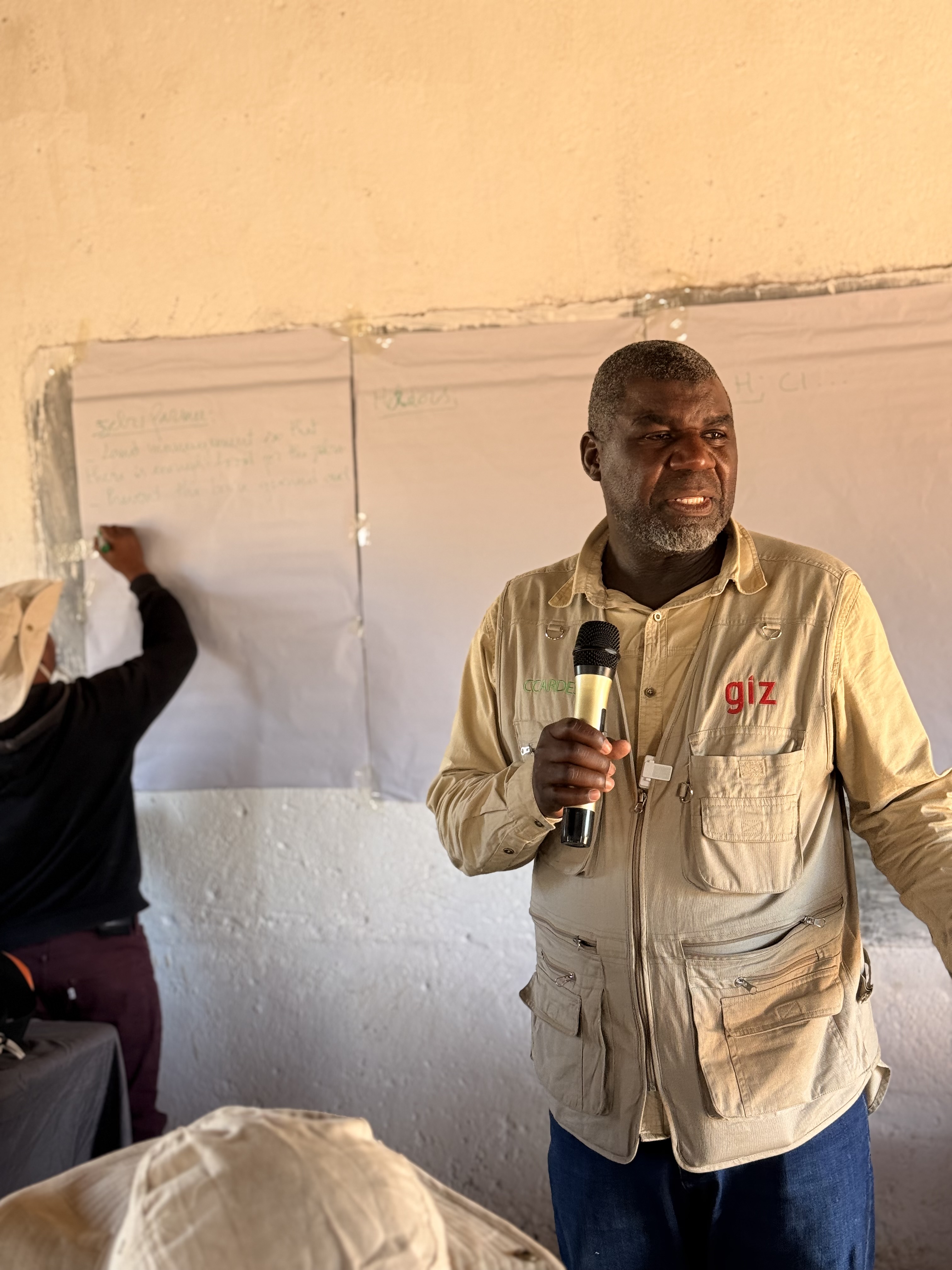
Dr Masaire, the Herding for Health Technical Advisor from Peace Parks Foundation, used the “four legs of the cow” to explain the relationship between livestock productivity, rangeland health and community organisation. He explained that, just as a cow cannot stand properly when one leg is weak, a livestock-production system cannot perform effectively when any of the four areas is neglected.
The first leg, nutrition, focused on ensuring that livestock have adequate pasture and water throughout the year. Community members learned about planned grazing, fodder preservation and the importance of allowing grazed plants enough time to recover before animals return to the same area. Participants also discussed how uncontrolled livestock movement allows animals to repeatedly graze the most palatable grasses. Over time, this weakens valuable perennial grasses and leaves animals with poor-quality forage during the dry season. Planned grazing can improve livestock nutrition while supporting grass recovery, soil cover and water infiltration.
The second leg addressed animal health, including disease prevention, vaccination, dipping, deworming and parasite control. Participants learned how coordinated herding can make it easier to observe livestock, identify health problems early and manage ticks and other disease risks.
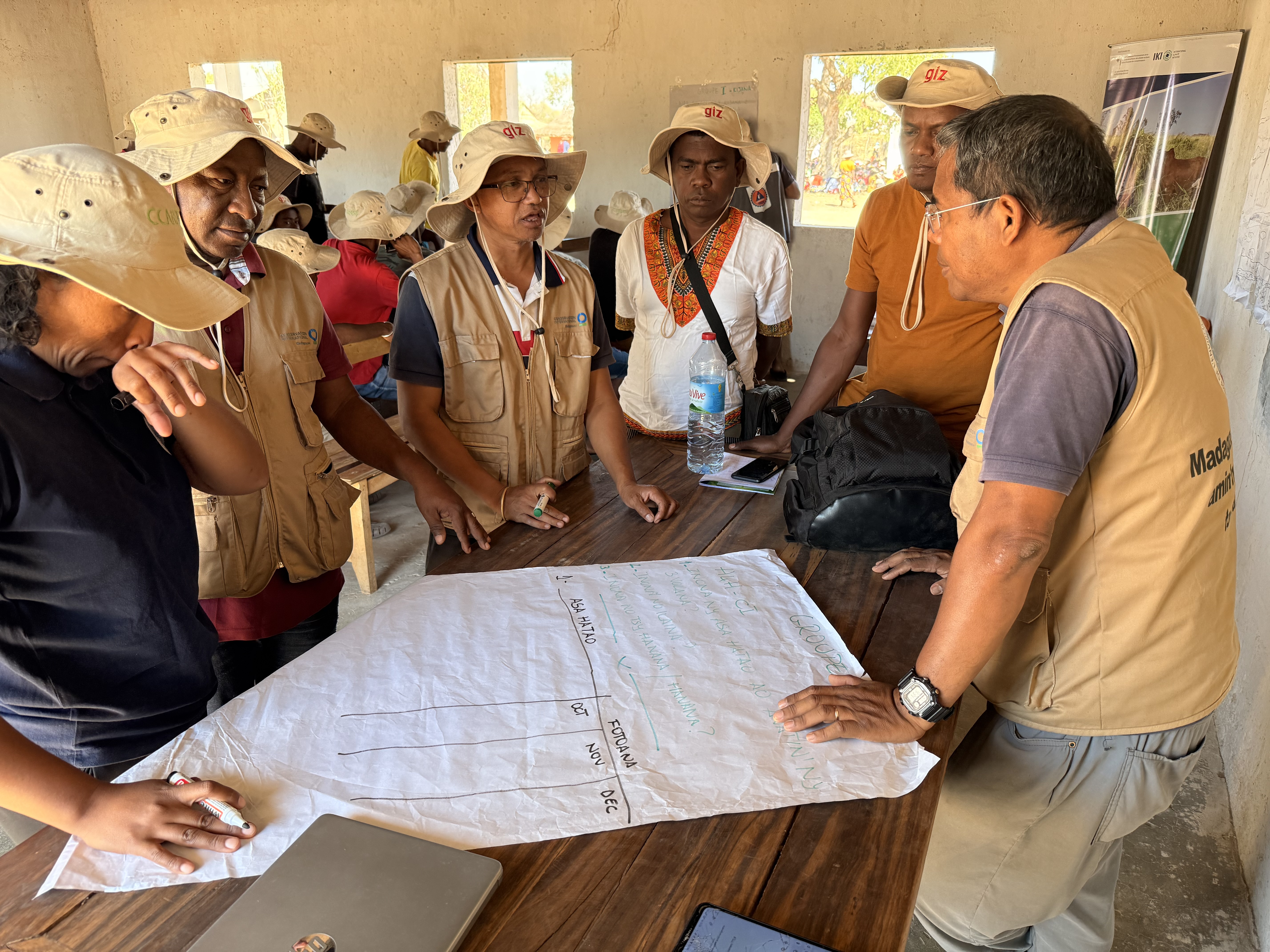
Reproduction formed the third leg. Discussions focused on herd structure, breeding performance, suitable numbers of bulls, regular monitoring and record-keeping. Participants learned that reproductive efficiency directly affects the number of healthy calves produced and the ability of livestock owners to achieve their production and livelihood goals.
The fourth leg covered governance and management. It highlighted the importance of organised herding, grazing plans, livestock records, community rules, supervision of herders, access to water and shared responsibility for managing communal rangelands. With the four legs clearly understood, the learning moved from discussion to the kraal, where one community member voluntarily made their herd available for demonstration and practical learning.
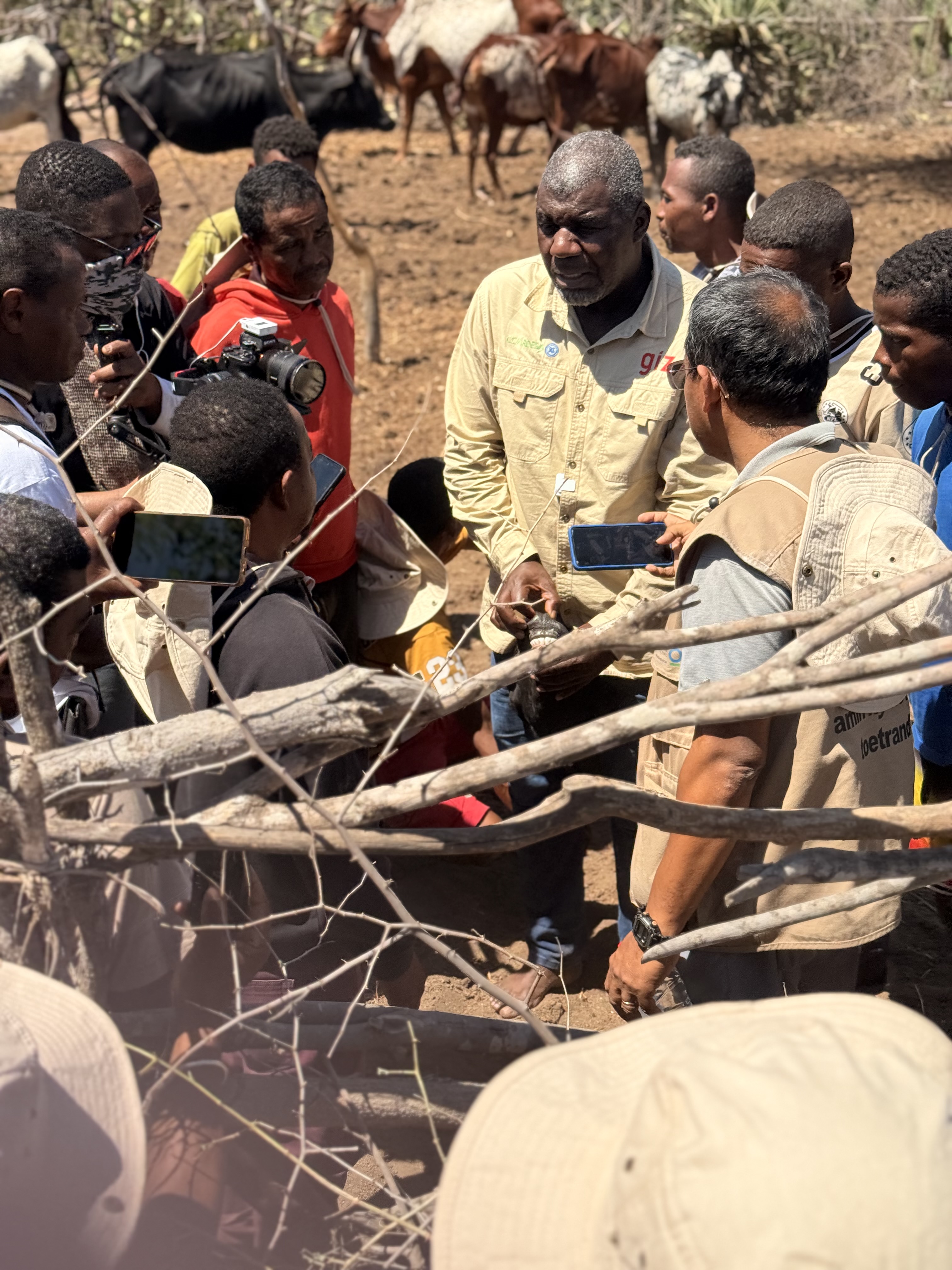
Working with the livestock owner and technical team, participants counted and categorised the Zebu cattle, checked their general health and assessed their ages. The activity provided a practical example of how farmers can analyse herd size, composition, condition and reproductive potential.
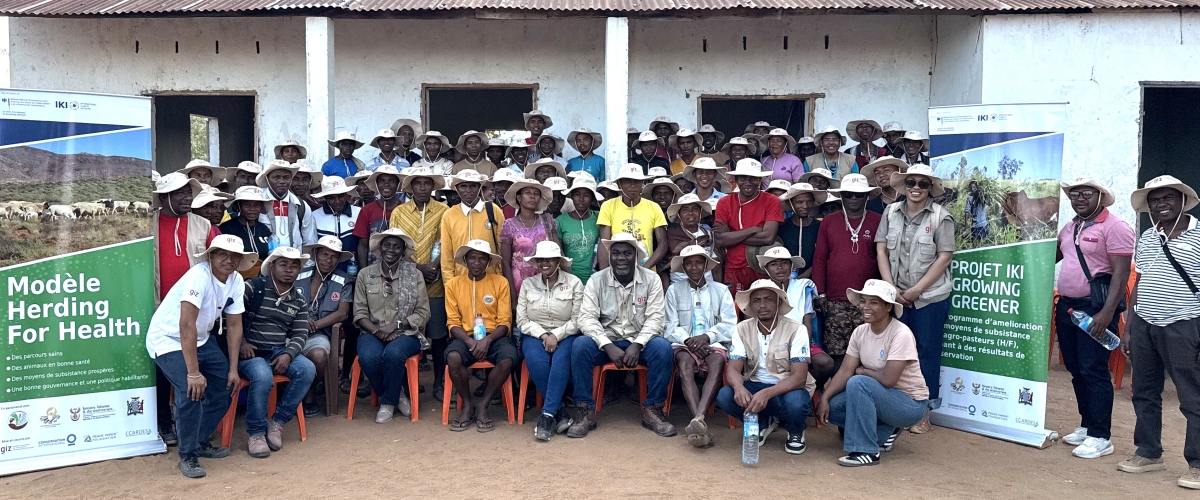
The kraal became an open-air classroom where the 94 community members connected the four legs to real animals. They observed how nutrition influences body condition, how animal health affects survival, how herd structure supports reproduction and how management decisions determine overall productivity. The demonstration enabled participants to understand how similar assessment methods could be applied to their own herds.
The practical exercise also demonstrated that livestock productivity and ecosystem health are closely connected. When animals are moved according to a planned grazing system, grazed areas are given sufficient time to recover. Managed livestock movement can improve nutrient cycling and soil fertility, reduce excessive dry plant material and create better conditions for grass growth.
By relating the Herding for Health approach directly to the community’s Zebu cattle and livelihood priorities, the facilitators helped transform what initially appeared to be an external project concept into a locally relevant solution. Following the detailed explanation of the four legs and the practical demonstration at the kraal, the community members accepted the Herding for Health concept and expressed their willingness to participate in its implementation.
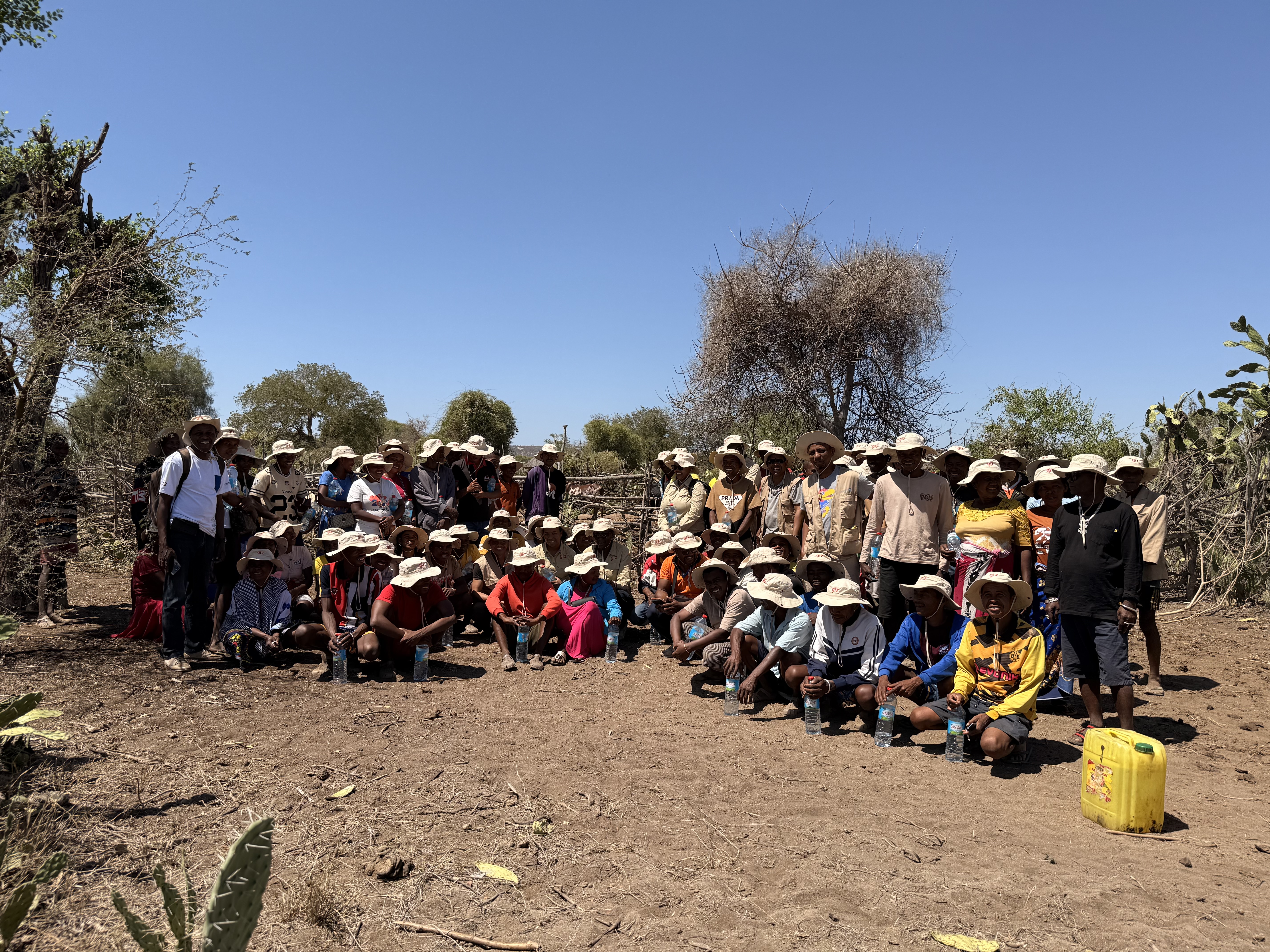
On the final day, the community developed an action plan identifying priority activities, responsibilities and areas requiring technical support. The plan provides a foundation for collective action on grazing management, animal health, reproduction, record-keeping and the sustainable use of communal rangelands. The process reinforced a central principle of Herding for Health: communities must not be treated as passive beneficiaries. Livestock owners and local leaders must participate in analysing their challenges, defining their goals and deciding how their livestock and rangelands should be managed.
For the IKI Growing Greener project, the community’s acceptance of the approach represents an important step towards locally led implementation in Madagascar. It contributes to the project’s wider objectives of restoring degraded rangelands, conserving biodiversity, enhancing soil carbon, improving livestock productivity and strengthening resilience to climate change. By the end of the three days, the community had achieved more than learning how to count and assess cattle.
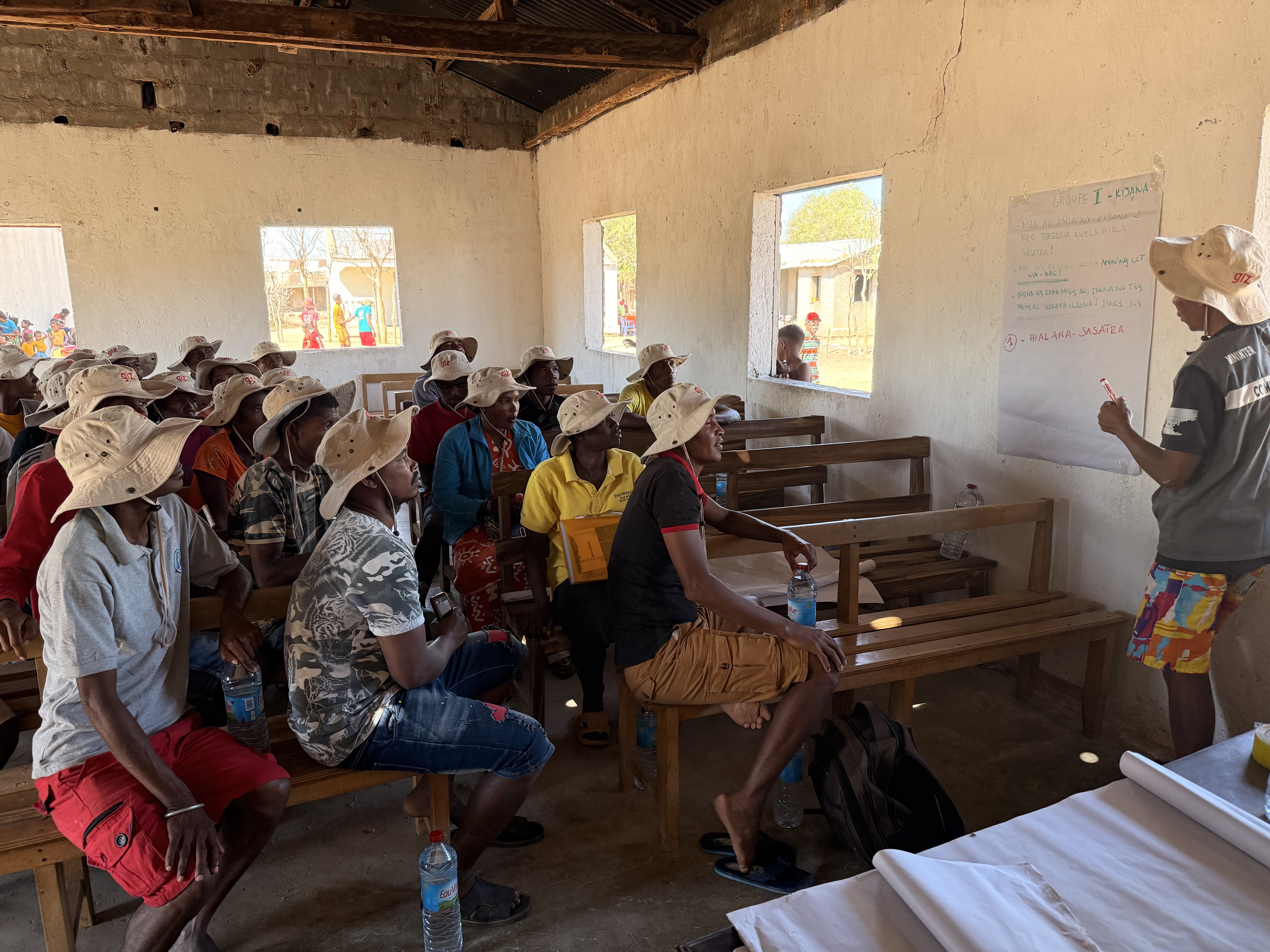
The 94 participants had gained a clearer understanding of the four essential elements of livestock productivity and agreed on a practical pathway towards healthier animals, restored rangelands and more resilient livelihoods. The Deputy Mayor, Mr Tafara, expressed satisfaction with the successful delivery of the training and the active participation of community members. He welcomed the knowledge and practical skills shared during the sessions, noting that the community now had a clearer understanding of the benefits of integrating livestock productivity with sustainable rangeland management. He confirmed that community members were ready to enrol in the Herding for Health approach and work with the implementing partners to improve animal health, restore rangelands and strengthen local livelihoods.
The IKI Growing Greener programme is funded by the German Federal Ministry for the Environment, Climate Action, Nature Conservation and Nuclear Safety through the International Climate Initiative (IKI). Its consortium partners are GIZ, CCARDESA, Peace Parks Foundation and Conservation South Africa.