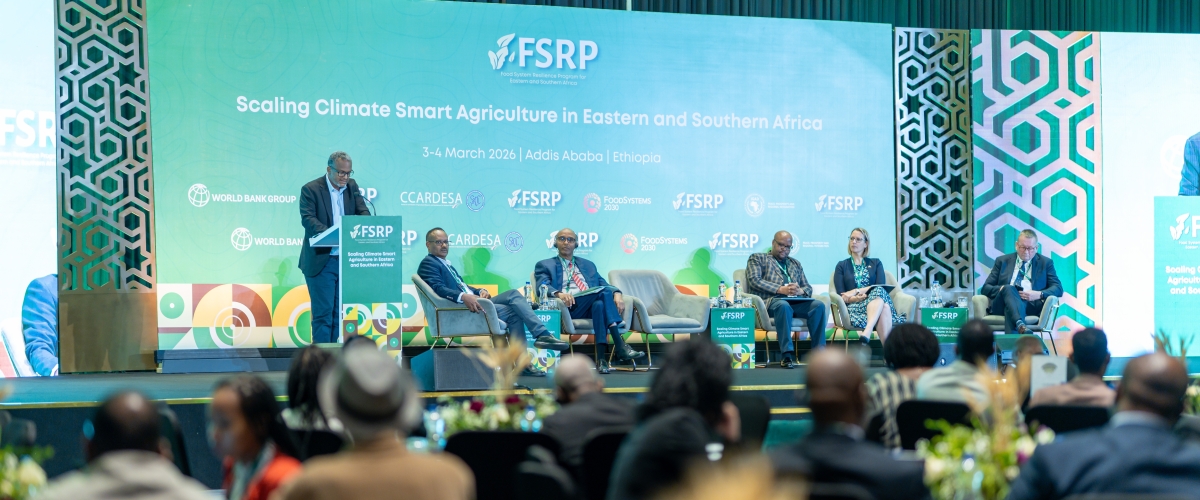
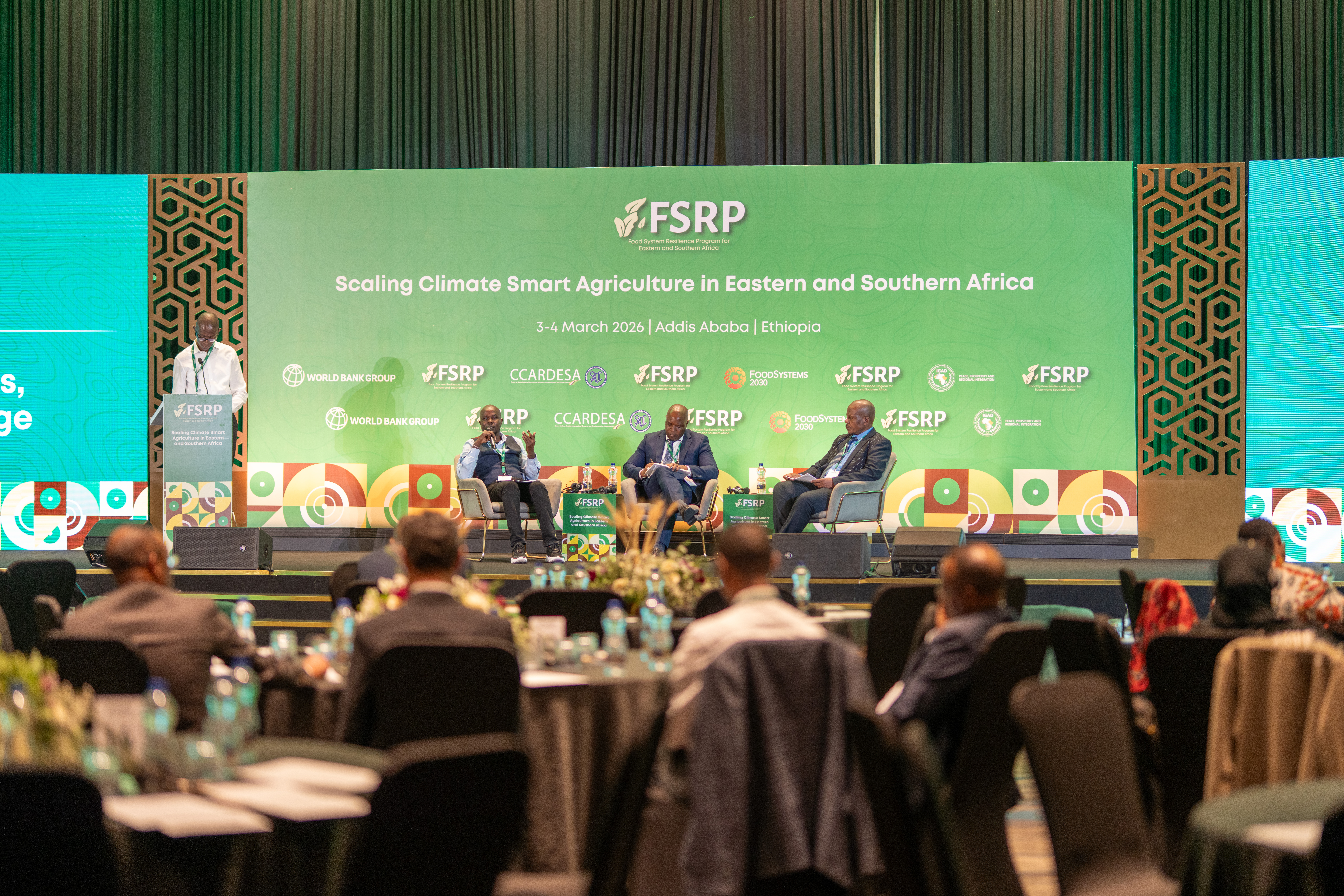
Ministers, senior government officials, development partners and technical experts from Eastern and Southern Africa gathered from 3 to 4 March 2026 in Addis Ababa, Ethiopia, for a forum focused on accelerating the scaling of climate smart agriculture (CSA) to strengthen food systems resilience.
The two day forum was convened by the Intergovernmental Authority on Development (IGAD) in partnership with the Centre for Coordination of Agricultural Research and Development for Southern Africa (CCARDESA) and the World Bank through the Food Systems Resilience Programme (FSRP). The meeting brought together policymakers and practitioners to align national and regional priorities to explore pathways for expanding climate resilient agricultural solutions.
The dialogue took place against the backdrop of increasing climate pressures affecting agriculture across the Horn of Africa and beyond. Recurrent droughts, erratic rainfall, land degradation and rising climate variability continue to threaten agricultural productivity, livelihoods and food security across the region.
 |  |  |  |
Speaking during the opening session, IGAD Director of Agriculture and Environment Division, Mr Daher Elmi, representing the IGAD Executive Secretary, called for stronger regional cooperation and the systematic adoption of innovation to transform agricultural systems.
“Climate shocks are no longer episodic events. They are structural realities shaping agriculture across our region,” said Elmi. “We must accelerate the adoption of innovation including artificial intelligence and digital climate services to strengthen resilience, reduce losses and transform farming systems.”
He reaffirmed IGAD’s commitment to supporting Member States to integrate climate smart agriculture into national frameworks, mobilise partnerships and place farmers at the centre of efforts to build resilient and food secure agricultural systems.
During the official opening and high level session, CCARDESA Executive Director, Prof Cliff Sibusiso Dlamini, highlighted the importance of coordinated financing, political leadership and partnerships in scaling climate smart agriculture across Africa. “Scaling climate smart agriculture requires stronger government commitment to financing, alignment between national and regional initiatives and strategic partnerships that can deliver impact at scale,” said Prof Dlamini. He also called on participants to support scaling out, scaling up, and scaling deep initiatives in order to maximise the impact of agricultural innovations across the continent. He emphasised that expanding innovations to more communities, integrating them into policies and institutions, and transforming mindsets and practices are all essential for achieving sustainable development outcomes.
The opening session also featured remarks from Mr Tim Robertson, World Bank FSRP Task Team Leader; Ms Olivia Owen, Ambassador of New Zealand to Ethiopia and the African Union; and Mr Ibrahim Elmi, Secretary General of the Ministry of Agriculture of Djibouti, representing the IGAD Chair. The leaders reaffirmed strong political commitment to scaling climate smart agriculture and strengthening regional cooperation.
Agriculture remains the backbone of most economies across the IGAD region, employing a large proportion of the population and contributing significantly to national economic growth. However, recurring climate shocks continue to undermine productivity, livelihoods and food security.
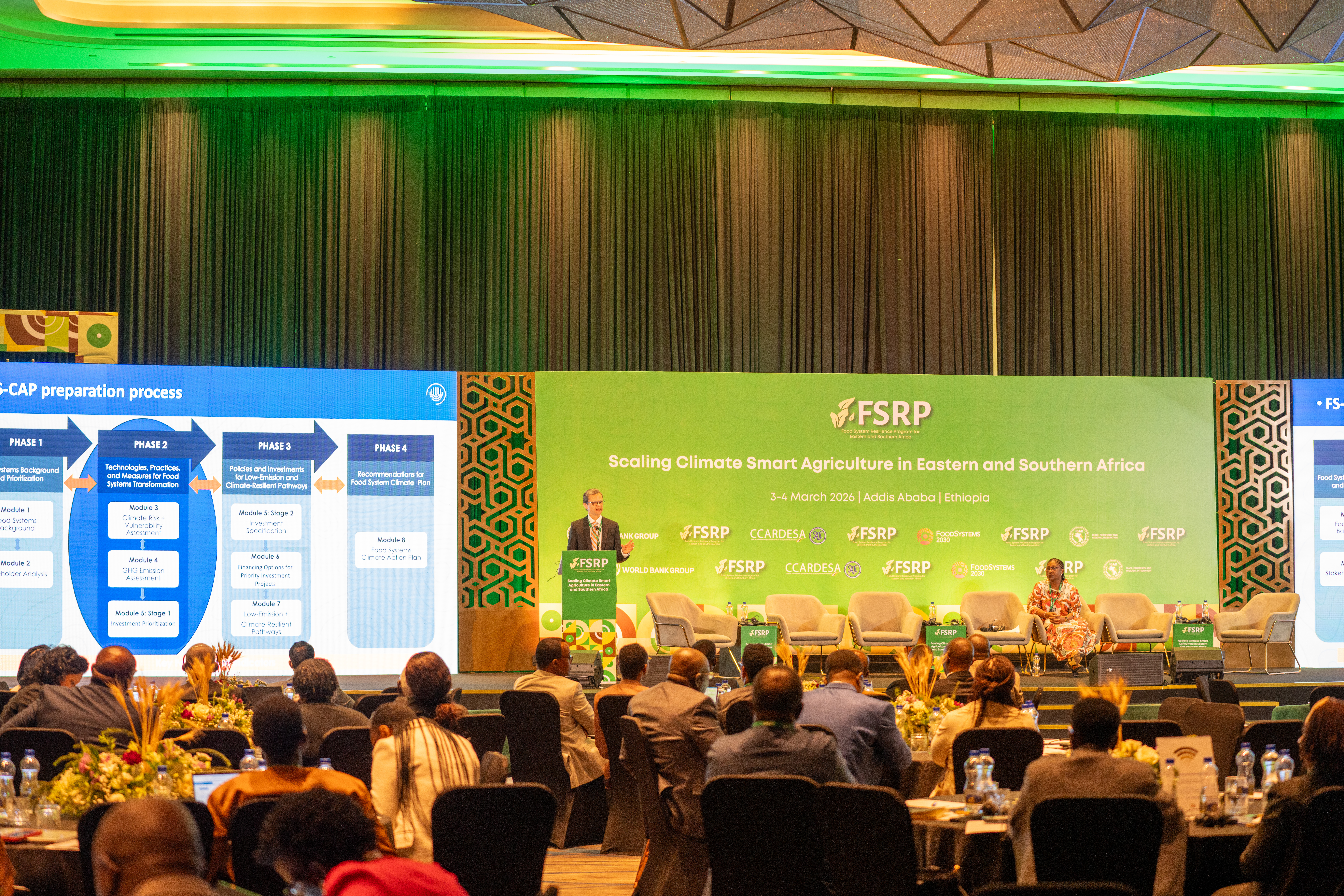
Against this backdrop, the forum focused on moving beyond isolated pilot projects towards coordinated regional scaling of climate smart agriculture solutions. Discussions explored how to better align Food Systems Climate Action Plans with National and Regional Agricultural Investment Plans, while strengthening implementation of commitments under the Comprehensive Africa Agriculture Development Programme (CAADP).
Participants also examined practical pathways for strengthening climate resilient crop and livestock systems, improving water management and irrigation efficiency, restoring soil health, and expanding the use of digital agriculture and early warning systems. Additional discussions focused on improving access to finance and risk mitigation tools, as well as increasing women and youth participation in climate smart agricultural value chains.
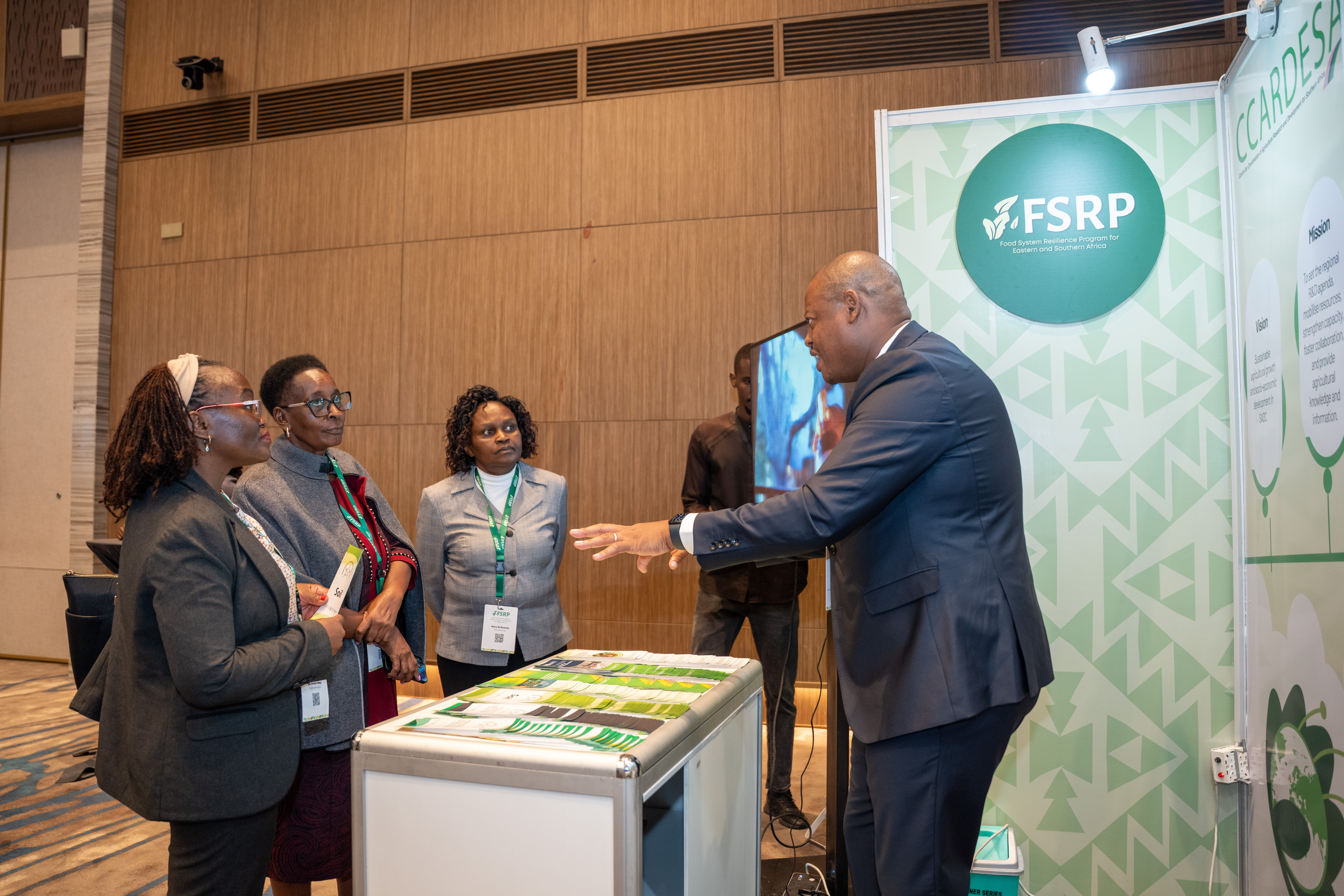
The forum further highlighted growing collaboration between IGAD, CCARDESA, AUDA-NEPAD and the World Bank under the Food Systems Resilience Programme to strengthen coordination and support the transformation of food systems across Eastern and Southern Africa, in particular.