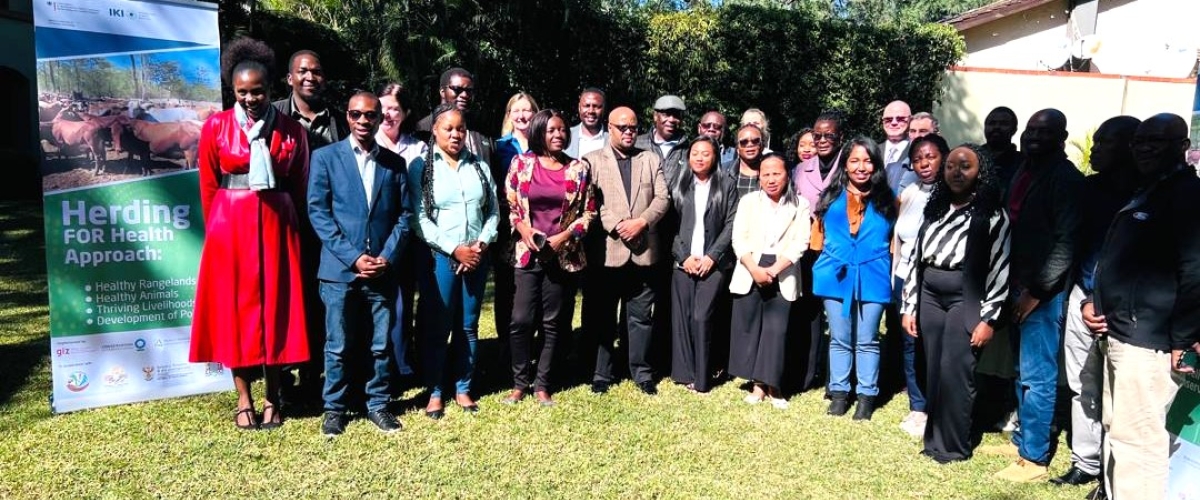
The Regional Steering Committee (RSC) meeting for the IKI Growing Greener – Herding for Health initiative concluded at the Protea Hotel in Livingstone, Zambia, with strong reaffirmations of regional cooperation, innovation, and sustainable land management. The high-level event brought together government officials, development partners, researchers, and civil society actors from Zambia, Botswana, South Africa, and Madagascar, as well as representatives from GIZ, BMUKN, Z-U-G, and the German Embassy.
In his welcome remarks, Director Chongo underscored the importance of cross-border collaboration in addressing shared environmental and livelihood challenges. “The work we undertake transcends borders and institutions. It is about improving lives, empowering communities, and strengthening regional cooperation,” he said, further reminding participants of Livingstone’s natural beauty as a symbol of the harmony needed between humans and nature.
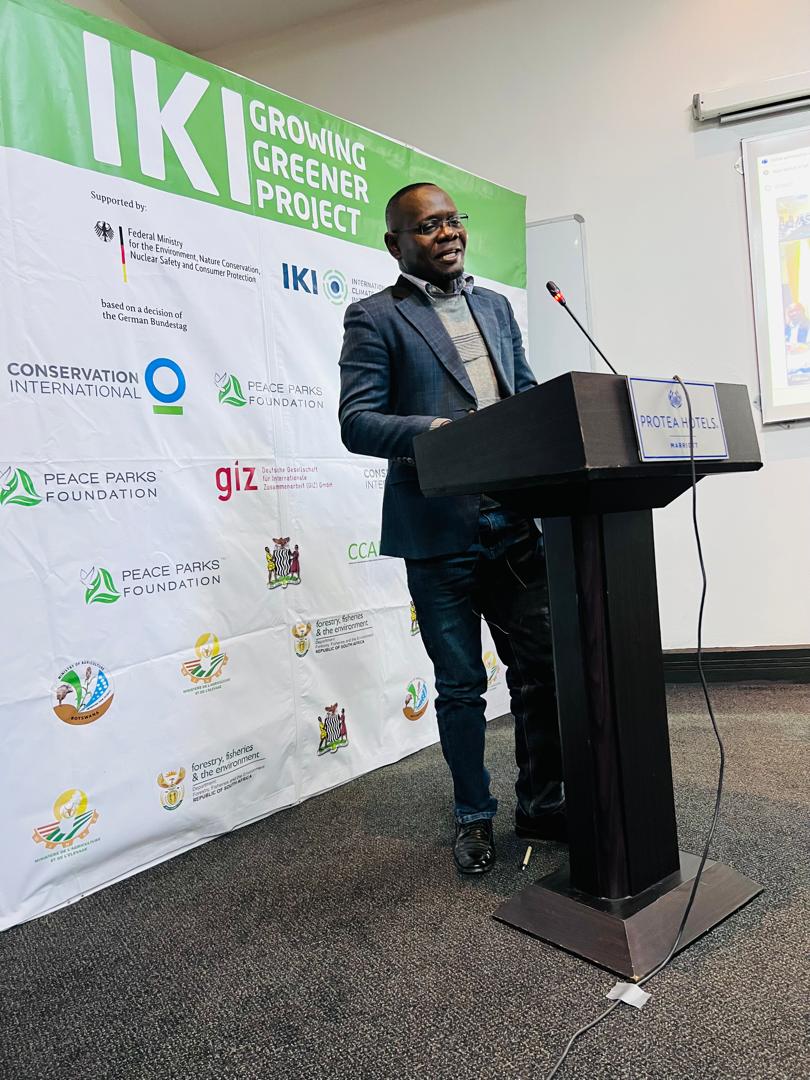
Speaking on behalf of German Federal Ministry for the Environment, Climate Action, Nature Conservation and Nuclear Safety (BMUKN), Ms Larissa Stiem-Bhatia, the Policy Advisor for Nature-based Climate Action emphasized Germany’s long-standing support to Southern Africa through the International Climate Initiative (IKI), which has funded over 45 projects in Zambia, Botswana, South Africa, and Madagascar. She praised the Herding for Health project for its unique focus on pastoralism, landscape restoration, and economic sustainability, aligned with UNCCD goals. She announced an upcoming visit by BMUKN ’s Head of Division to Zambia at the end of July and reaffirmed Germany’s commitment to knowledge sharing and regional transformation ahead of COP16 in Mongolia.
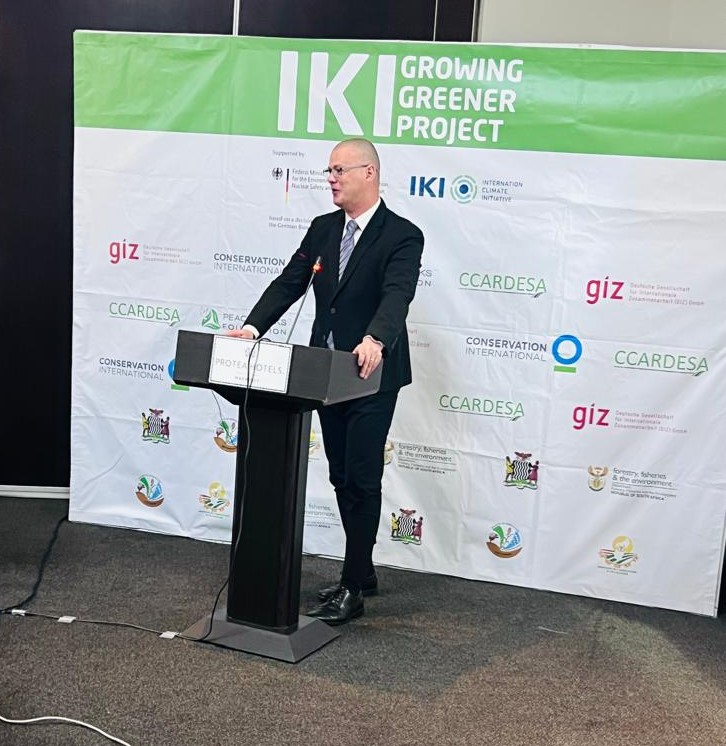
Mr. Christoph Schmidt, GIZ/SADC Country Director for Botswana, highlighted how global events such as the Ukraine and Gaza conflicts have impacted budgets and development timelines. He stressed the need to "do more with less" and embrace new, efficient, and cooperative ways of working. He described the IKI project in Zambia as a model of excellence and innovation, noting it is the first of its kind implemented by GIZ in Zambia in collaboration with eight dedicated partners. “If you want to go fast, go alone. If you want to go far, go together,” he quoted, emphasizing the power of partnerships.
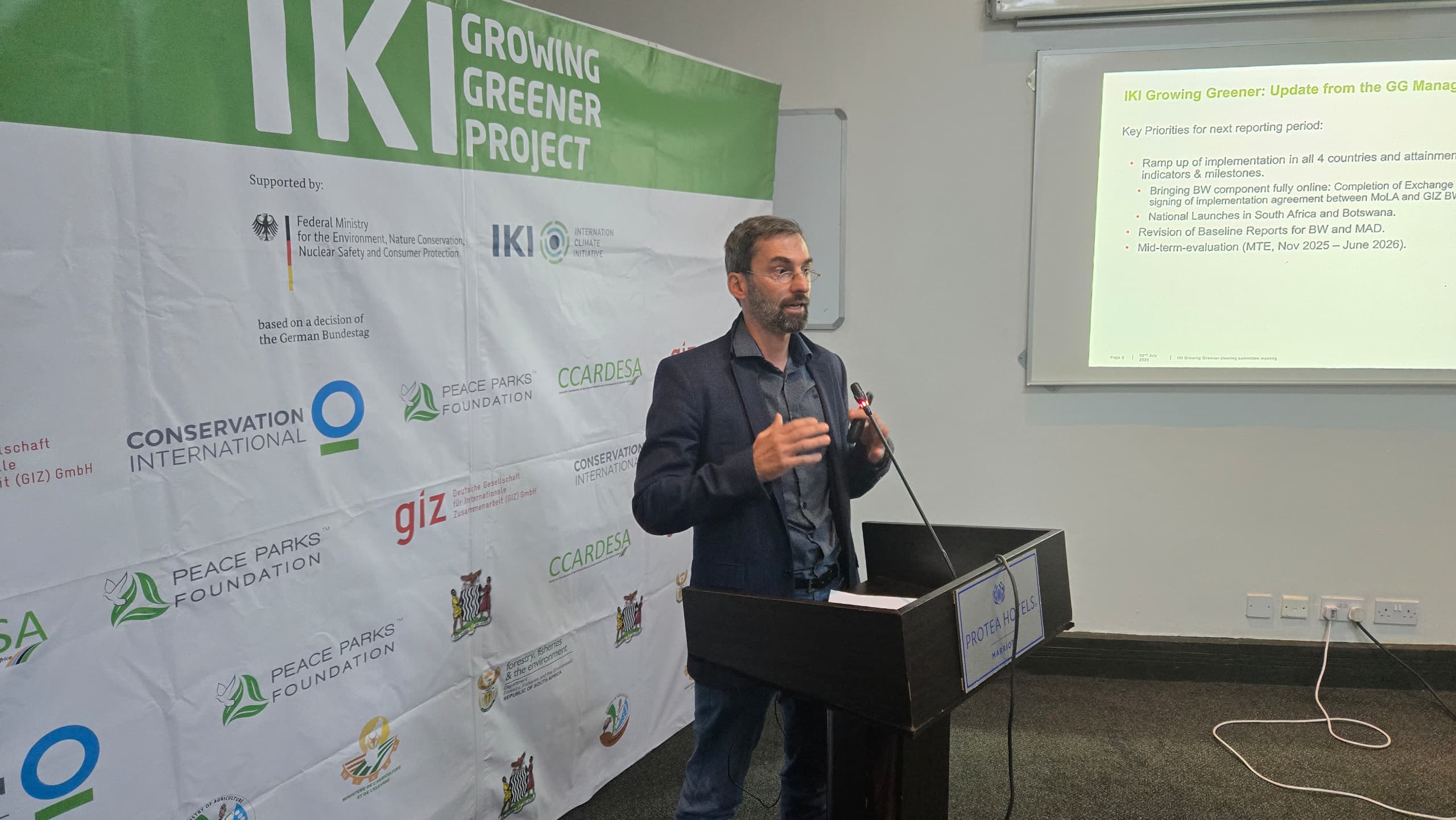
Mr. Martin Leineweber, IKI Programme Manager, presented strategic priorities for the next phase. He called for accelerated implementation in four focus countries, targeting the attainment of key indicators and milestones. He also announced the midterm evaluation, scheduled between November 2025 and June 2026, as an opportunity to refine strategies and strengthen alignment with project goals.
Dr. Misheck Musokwa presented the Terms of Reference (ToRs) for the Steering Committee, which were formally adopted. Each country will have two government representatives with one collective vote per country. Each consortium member will also hold one vote, while donors will serve as non-voting members. In the event of a tie, the host country chair will decide. It was agreed that South Africa will host the 3rd RSC, and they will confirm the dates, while Madagascar will host the 4th.
Zambia reported progress on the development of livestock and rangeland policies, a revised national climate change policy, and ongoing work on the National Adaptation Plan (NAP). Madagascar shared its efforts in fire management, community behaviour change towards climate-smart practices, and legal reforms in pastoral and grazing management. Botswana is advancing an organic fertilizer strategy, has trained herders, procured firefighting equipment, and established a monitoring framework. South Africa presented some of the work they have been doing, specifically the adoption of climate-resilient approaches to biodiversity conservation and management, aimed at restoring and maintaining ecological infrastructure. In addition to supporting the implementation of Kaonafatso ya Dikgomo (KyD) 2025 – 2029, one of five Animal Improvement Schemes declared by the Minister of Agriculture in terms of Section 20 (1) of the Animal Improvement Act (62 of 1998).
Additionally, regional innovations, such as the development of AgriHubs and commodity-based value chains, were reported. These models are being used to strengthen conservation and create economic incentives around biodiversity, particularly through connections to Peace Parks.
Delivering the official closing remarks, Prof. Cliff Dlamini, CCARDESA Executive Director, applauded GIZ and all implementing countries for the tangible progress made. “This project is a cornerstone for sustainable development in our region,” he stated, urging all partners to "up their game," particularly encouraging Botswana to accelerate momentum. He welcomed the concept of ‘professional herders’, noting its potential to strengthen land restoration efforts. He further emphasized the importance of grassroots innovation, acknowledging the project's strong alignment with Agenda 2063, the Post-Malabo Agenda, SADC, and UN frameworks. Prof. Dlamini also recommended reviewing some indicators to ensure they reflect ground realities and reaffirmed the need to keep communities central to all interventions.
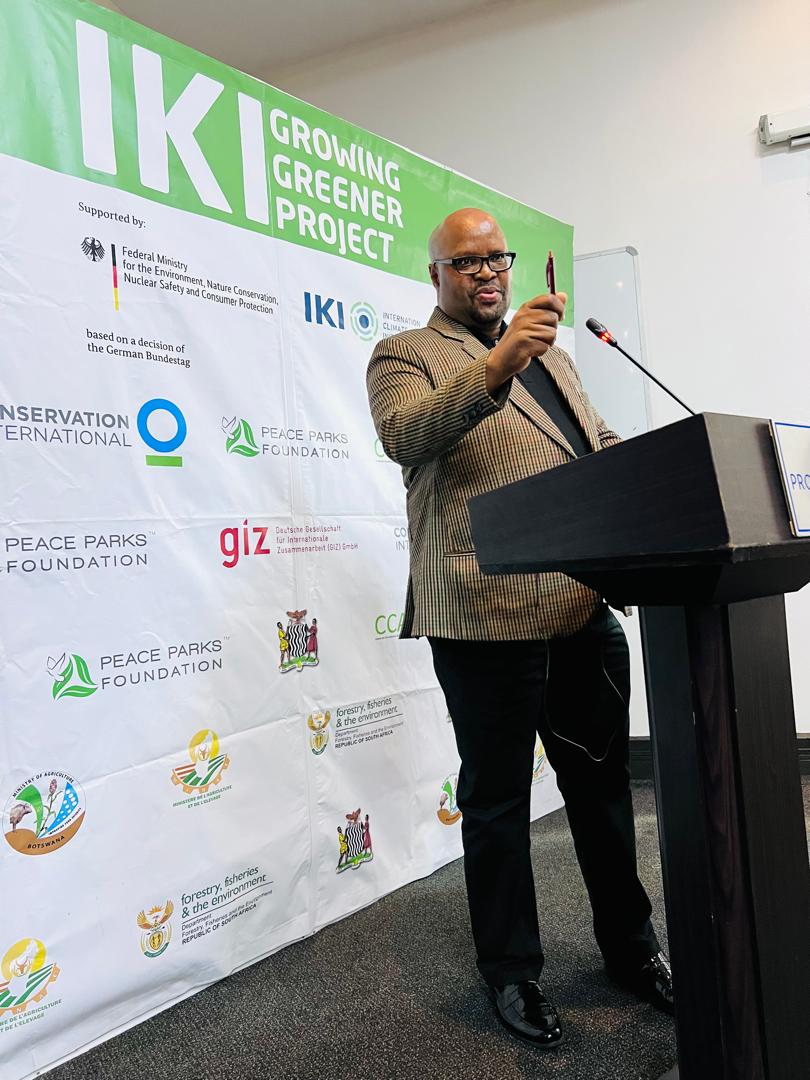
The German Embassy representative, Mr Buumba Siamalube, highlighted the alignment of the project with the Sustainable Development Goals (SDGs) and underscored the importance of investing in learning and knowledge generation. With over €30 million already committed in response to drought conditions in the region, Germany reiterated its ongoing support for both immediate relief and long-term resilience building.
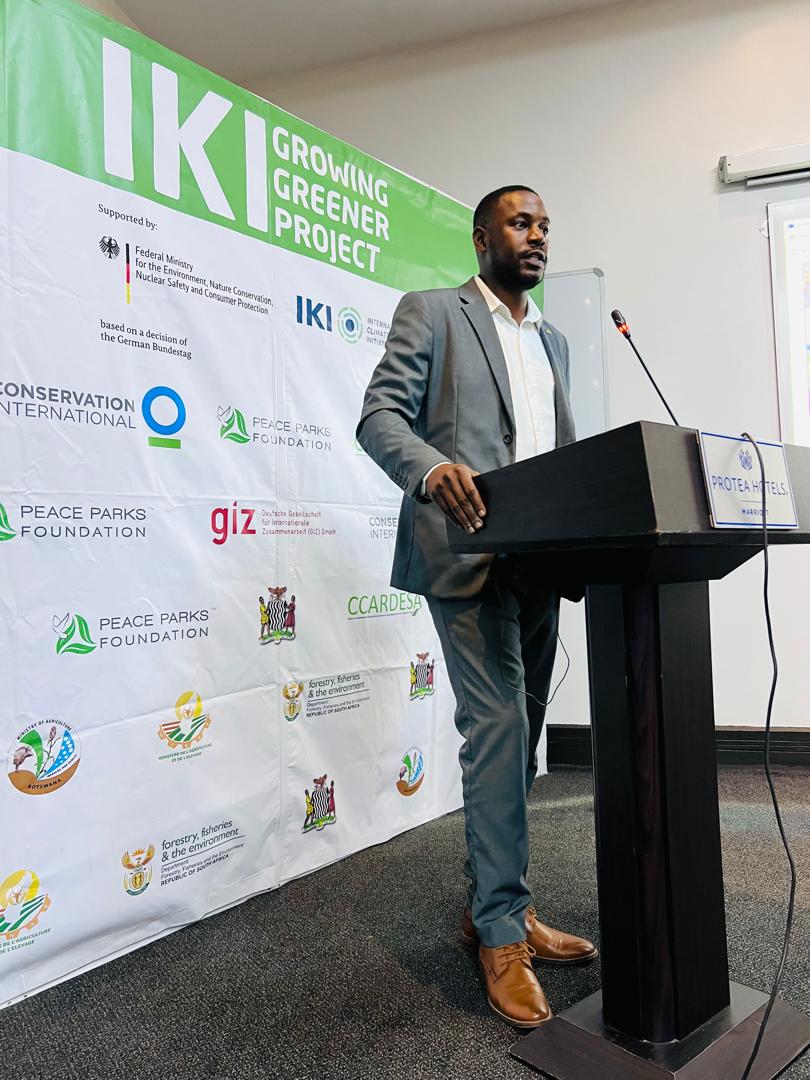
The meeting concluded with a renewed sense of purpose and shared vision. As Zambia and other SADC countries continue to face the harsh impacts of climate change, the call to maximize impact, build capacity, and scale successful models has never been more urgent. “This project has strong potential for carbon sequestration, economic upliftment, and regional integration,” said Director Chongo, emphasizing the importance of traditional leadership and cross-country replication moving forward.