By Felix Mothatego
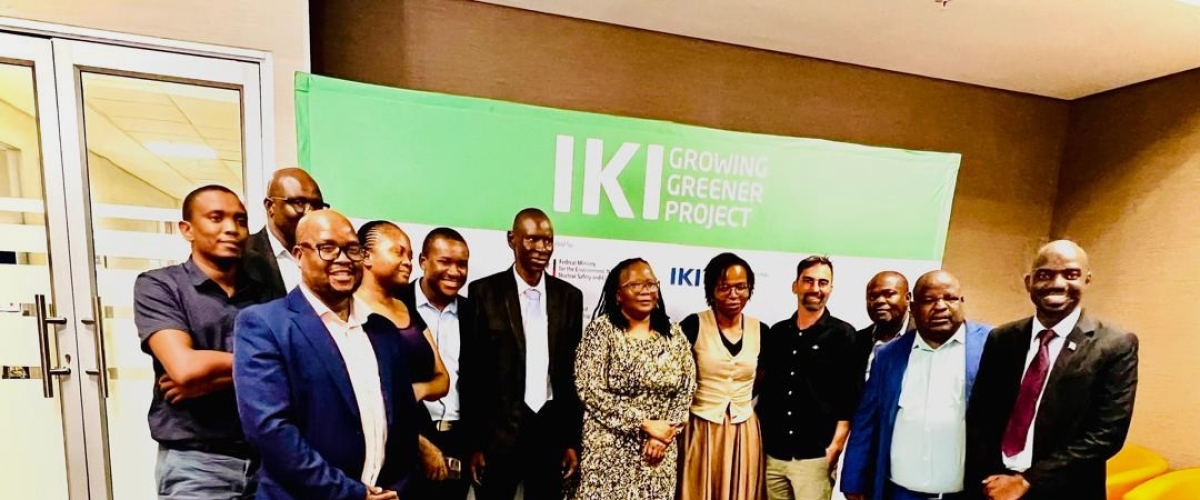
The IKI Growing Greener project officially moved from the planning stage to implementation following the first Technical Working Group (TWG) meeting held on 5 February 2026 at the Deutsche Gesellschaft für Internationale Zusammenarbeit (GIZ) offices in Gaborone’s Central Business District.
The project, titled Restoration and Sustainable Use of Agro-Pastoralist Systems in Open Arid Landscapes across Southern Africa, focuses on addressing land degradation while improving livelihoods in arid and semi-arid regions. During the meeting, TWG members validated planned activities, discussed implementation strategies, and aligned project actions with government policies.
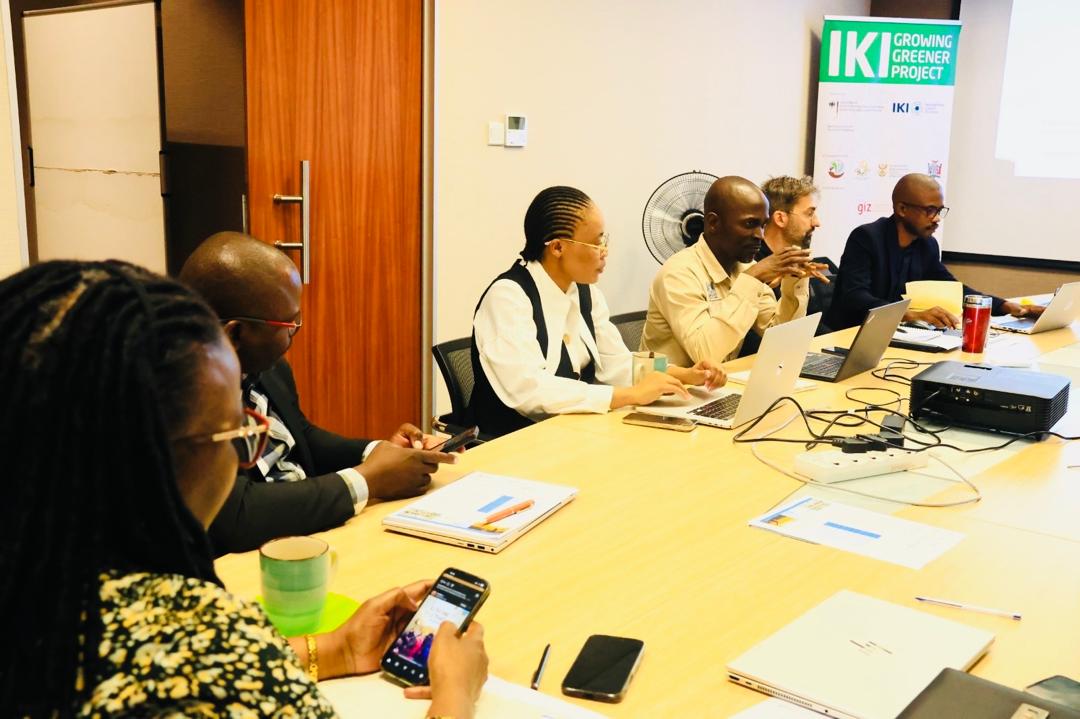
This inaugural meeting marked the first time the TWG convened to collectively assess government considerations relevant to project implementation and to address outstanding questions. Project Manager Mr. Martin Leineweber of GIZ described the meeting as a positive step for both the project and the Government of Botswana, noting that it is expected to bring tangible benefits to communities. He explained that the TWG comprises government institutions and partner organizations, including Peace Parks Foundation, CCARDESA, Conservation International, and the Ministry of Lands and Agriculture (MoLA). He expressed satisfaction with the participation of Conservation International and MoLA.
Mr. Leineweber noted that the project has been in development for a long time and that extensive preparatory work has already been undertaken. “We owe this to Batswana on the ground and to the donors,” he said.
He highlighted Botswana as a unique beneficiary among the participating countries, as it is the only one implementing commodity-based trade for the benefit of both people and nature through the Herding for Health program. Commodity-based trade promotes market access for beef produced in Foot and Mouth Disease (FMD) red zones, which historically lacked access to lucrative beef markets. Through standards recognized by the World Organization for Animal Health (OIE), farmers in areas such as Eretsha village have gained access to export markets while managing FMD transmission risks.
Mr. Leineweber added that each participating country has a budget of approximately six million euros, and that 2026 is a critical year to demonstrate progress to donors ahead of the project’s planned completion in 2029.
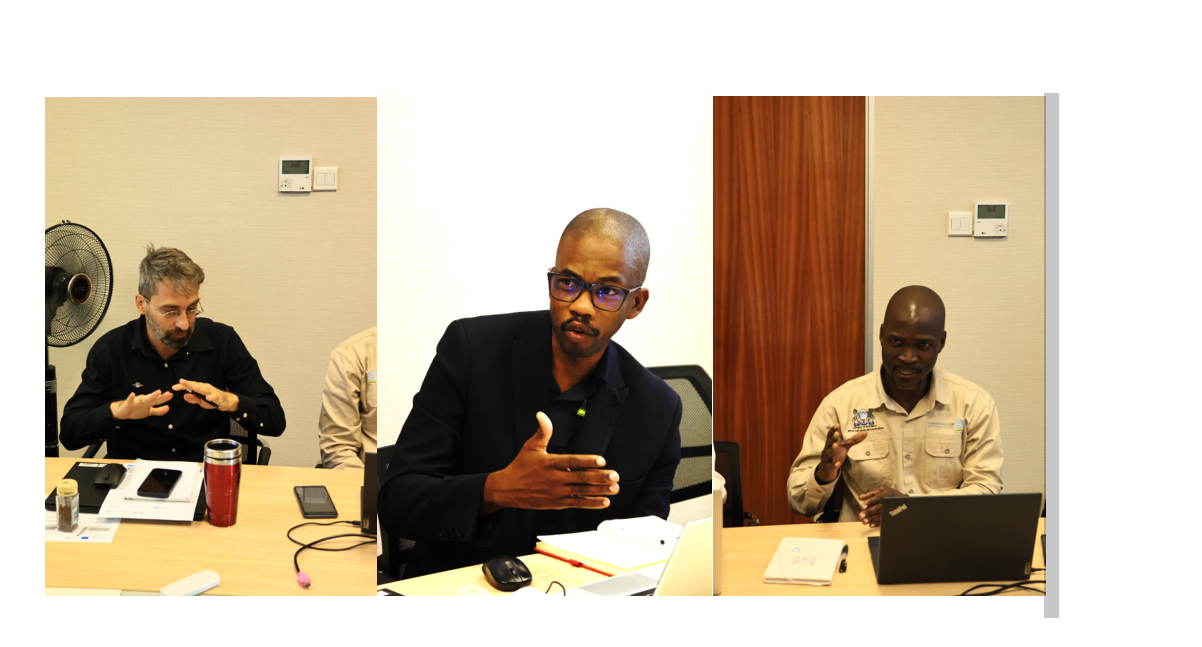
Mr Leinweber, Mr Leepile and Dr Mudongo
Providing background on the project, Technical Advisor Mr. Leungo Leepile said the initiative focuses on sustainable land management across four countries — Botswana, Madagascar, South Africa and Zambia, and is funded through the IKI International Climate Initiative. The project addresses land degradation resulting largely from historical land-use practices.
In Botswana, the project targets over-accumulation of livestock, driven in part by challenges in managing land sustainably due to Foot and Mouth Disease risks in areas adjacent to wildlife. The project will focus on four villages in the NG8 area, Gumare, Tubu, Habu and Nokaneng, and operates within the framework of four international environmental agreements: The United Nations Convention to Combat Desertification, the Convention on Biological Diversity, and the United Nations Framework Convention on Climate Change.
Mr. Leepile explained that poor livestock management leads to land degradation, reducing land productivity and undermining community livelihoods — a challenge mirrored in other project countries. In Madagascar, the project focuses on the south-western region; in Zambia, the Simalaha area in the south-west; and in South Africa, the Northern Cape, where the emphasis is on small stock rather than cattle.
The project consortium comprises GIZ, Conservation International, CCARDESA and Peace Parks Foundation. Conservation International is implementing the project in Botswana, South Africa and Madagascar, while Peace Parks Foundation leads implementation in Zambia. Across all countries, the consortium works alongside relevant environmental and agricultural ministries.
Mr. Leepile said the project was initially envisaged to run from October 2023 to September 2029, with an overall budget of 20 million euros. Deliverables are organized under four main outputs: technical implementation on the ground; livelihood improvements including market access and value-chain development; policy support for sustainable land management and rural economic development; and knowledge management and communication to support scaling and replication.
Output areas one and two are implemented by Conservation International and Peace Parks Foundation, while CCARDESA leads knowledge management and communication. GIZ coordinates the consortium and leads the policy development component.
The project’s core model is Herding for Health, which promotes planned grazing, cluster herding, seasonal grazing, land restoration activities, capacity building, and livestock value-chain development.
Senior Manager for the Herding for Health model at Conservation International Botswana, Dr Edwin Mudongo, said implementation will be carried out in collaboration with partners who will be identified and supported through sub-grants. Conservation International will provide oversight and monitoring.
He said implementation will follow a phased approach. Phase one will focus on demonstrating the model in Nokaneng village, building on a pilot introduced earlier in Habu village under the now-completed Pro-Nature Enterprises Project. From 2027 to 2028, phase two will scale up the demonstrated interventions. Annual reviews will be conducted to track progress.
Dr Mudongo added that staff recruitment is underway, baseline ecological and socio-economic surveys have been completed for Nokaneng, and plans are in place to extend surveys to Gumare, Tubu and Habu. An implementation concept will be shared with GIZ and MoLA to guide detailed execution.
Meanwhile, Livestock Program Coordinator at MoLA, Mr. Onkemetse Mathemabe, cautioned project managers against excluding remote communities by relying too heavily on digital platforms. He emphasized that project success should be measured by accessibility to intended beneficiaries.
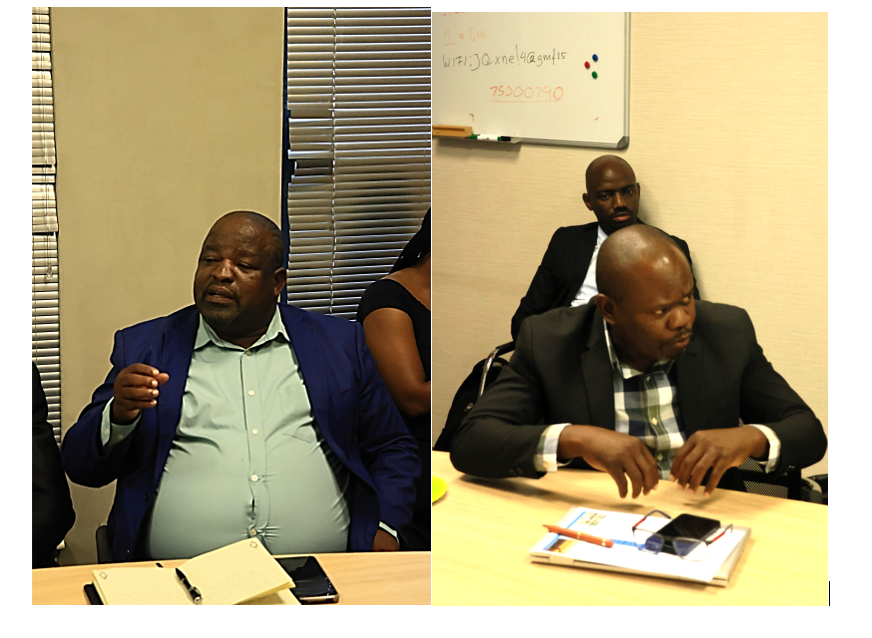

Mr. Mathemabe, Mr Oageng & Ms Letsebe
Mr. Mathemabe noted that many farmers in project areas live below the poverty datum line despite being surrounded by rich natural resources and stressed the need for proper guidance. He also urged the project to address human-wildlife conflict, particularly the risk of FMD transmission from wildlife such as buffalo, and to strengthen agricultural value chains so communities can meaningfully access markets.
For his part, the Principal Scientific Officer from MoLA, Thatayaone Rocky Oageng said most of these projects concentrate tend to leave out other parts of the country where they are also needed. He said it is important that the project managers consider issues of bush encroachment to make sure the animals have access to plentiful grazing, adding that after getting rid of some bushes we can be able to introduce palatable species, and recycle that using seeds.
Ms Kopo Letsebe ICT Support Officer at CCARDESA provided an overview of the Project's key Knowledge Management and Communication activities for the current year, including: development of knowledge products, a schedule of trainings, procurement of visibility material, and revamping of mobile application. In response, the TWG underscored the importance of leveraging on lessons learned from implementation of previous livelihoods improvement and land management projects in the general area. They emphasised the importance of capturing, packaging and communicating such knowledge to avoid duplication, navigate unintended outcomes, facilitate upscaling, and enhance continuity. She underscored and recognised the key role that CCARDESA plays on the IKI Project.
The author is A Sub-Editor under the Corporate Services Department in the Ministry of Lands and Agriculture (HQ) in Botswana.