Maseru, Lesotho – July 16, 2025
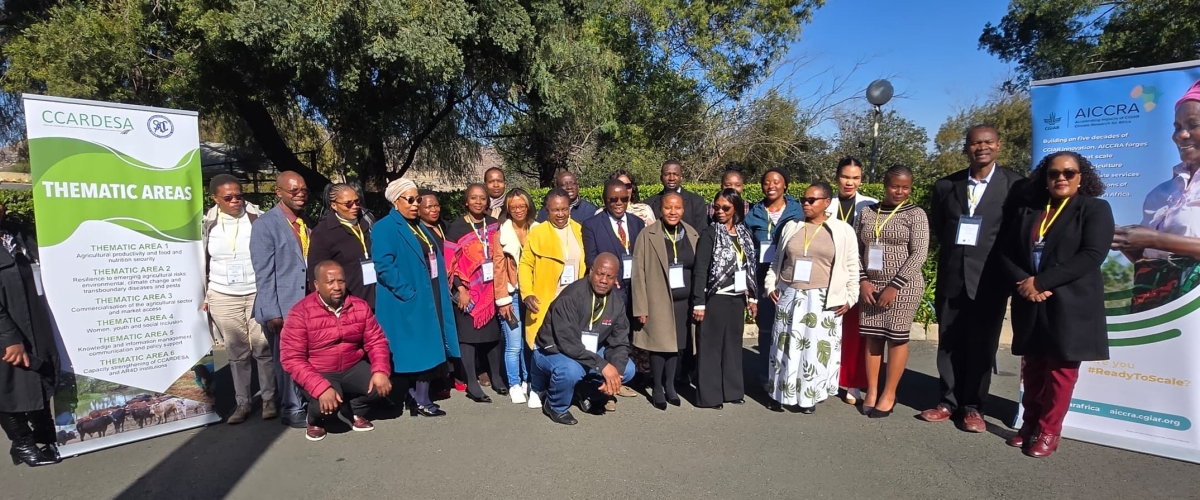
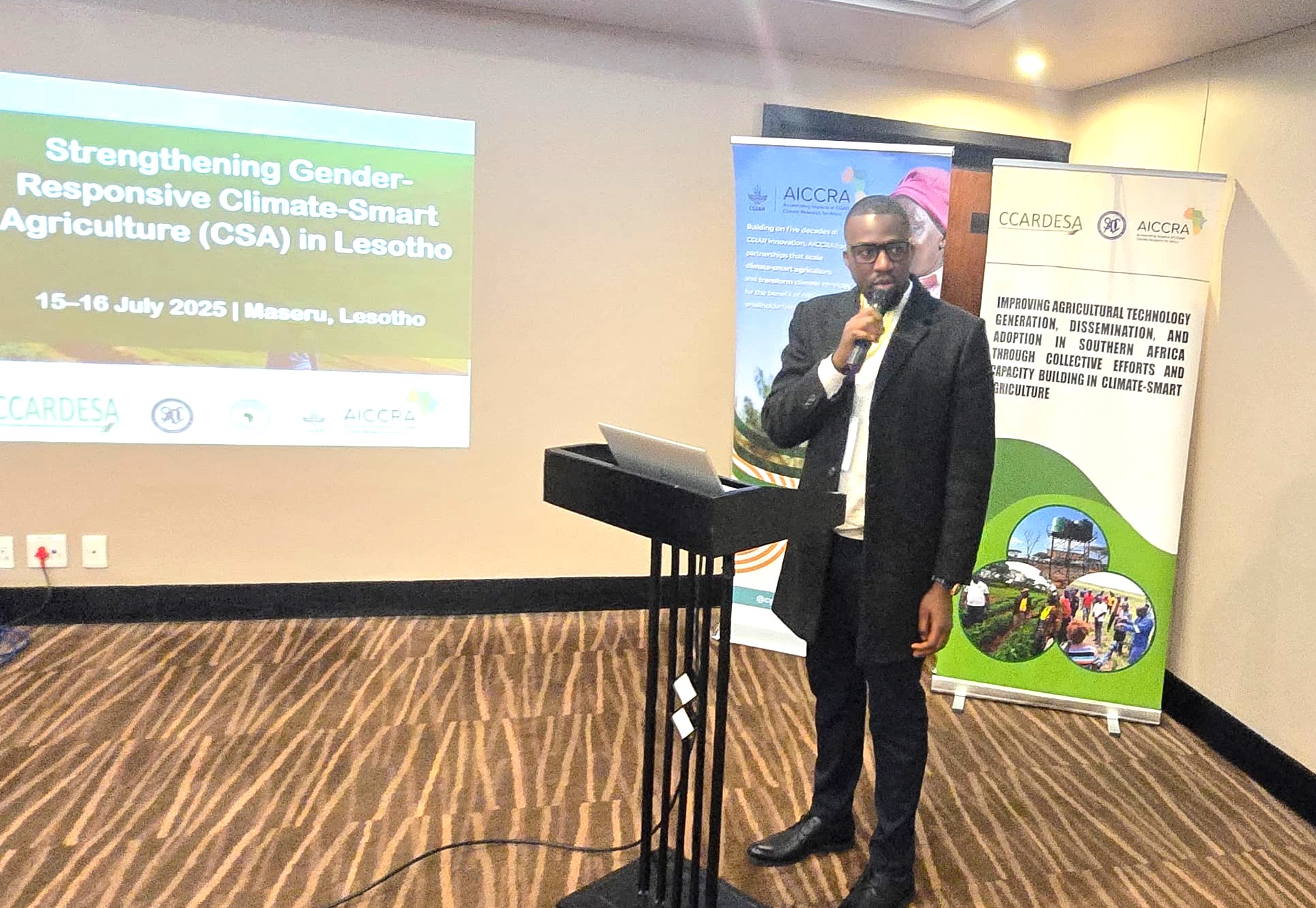
Women farmer leaders, researchers, NGO leaders, policy influencers, and policymakers gathered at the Avani Hotel in Maseru for two days on 15–16 July 2025 to chart a bold, inclusive course for national climate resilience. The Strengthening Gender-Responsive Climate-Smart Agriculture (CSA) in Lesotho workshop, hosted by the Centre for Coordination of Agricultural Research and Development for Southern Africa (CCARDESA) through the auspices of the Accelerating Impacts of CGIAR Climate Research for Africa (AICCRA) project, in partnership with the Food, Agriculture and Natural Resources Policy Analysis Network (FANRPAN) and International Livestock Research Institute (ILRI), aimed to integrate indigenous traditional knowledge, document barriers, and elevate women’s voices in undertaking CSA.
The workshop documented climate-smart indigenous traditional knowledge practices, and scientific CSA practices and technologies relevant for the Mountain kingdom, as well as the challenges women face in adopting CSA approaches. It also sought to generate gender-responsive policy and investment recommendations for Lesotho’s CSA agenda while establishing a vibrant Community of Practice (CoP) to sustain knowledge exchange and collaboration among women farmer leaders, researchers, NGOs, and policymakers.
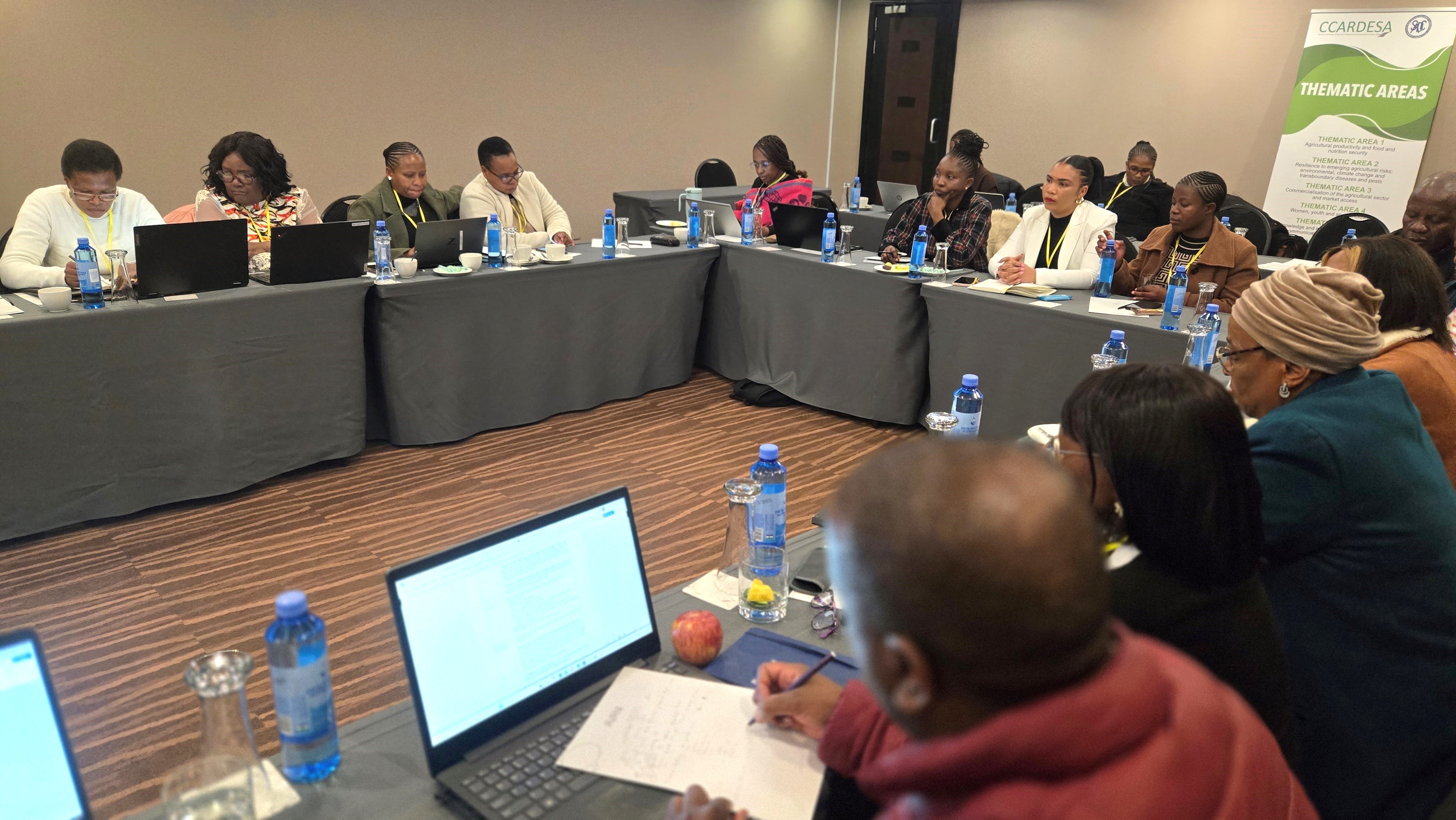
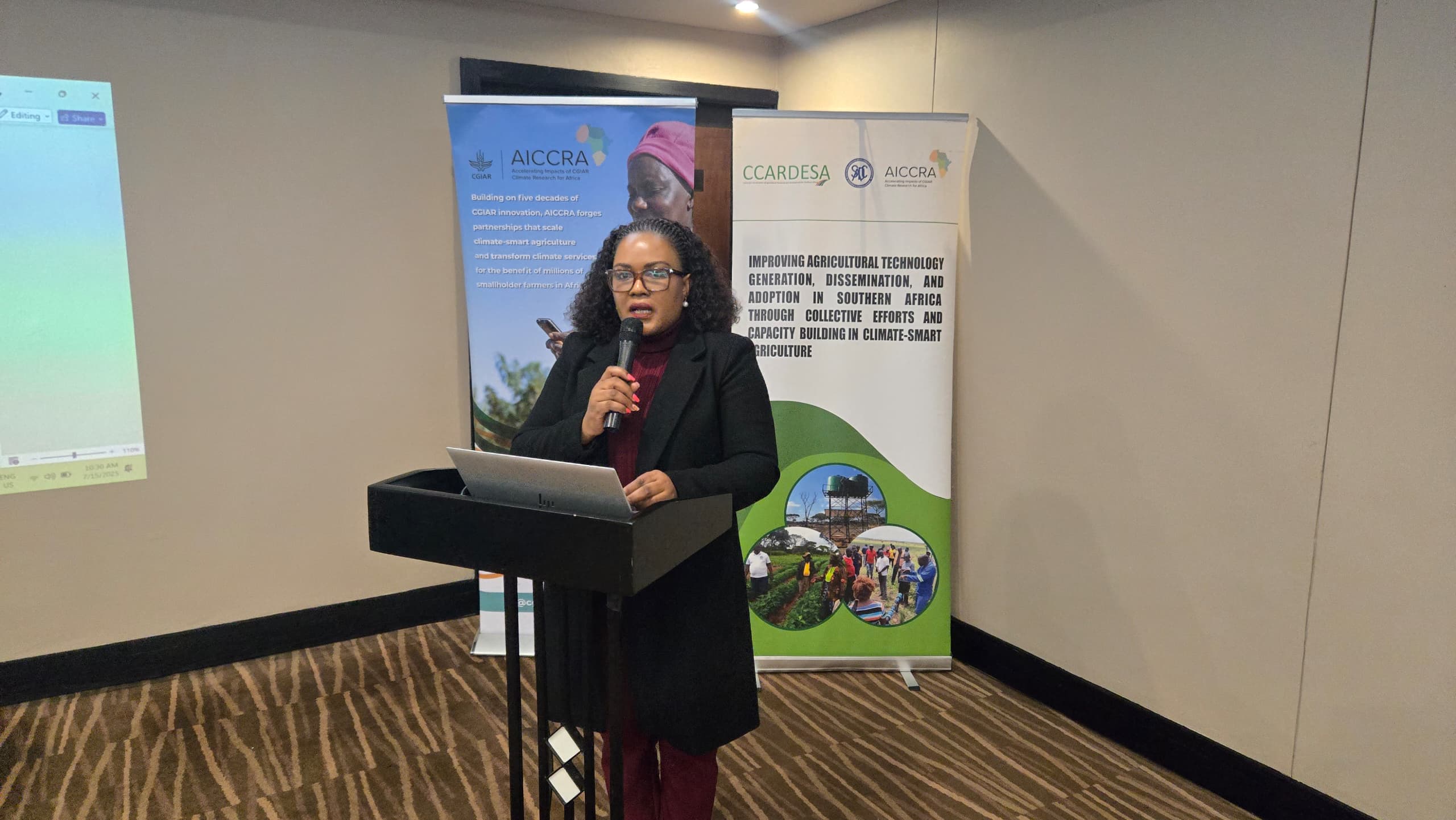
Speaking on behalf of the Executive Director, Prof. Cliff Dlamini, Ms. Futhi Magagula, Special Projects Coordinator and the AICCRA Coordinator, started her remarks with a powerful message. “The SADC region is highly vulnerable to climate risks, cyclones, droughts, floods, and rising temperatures, which threaten its food systems, rural livelihoods, and aggravate existing inequalities. CSA offers a pathway to resilience, but it must be gender-responsive and inclusive.” She emphasized the importance of women in agriculture, the barriers they face, and the need to integrate indigenous and gender perspectives in CSA strategies. She called for joint efforts by governments, NGOs, researchers, and partners to build a climate-resilient future for all. CCARDESA extends its gratitude to the Ministry of Agriculture and Food Security, Lesotho, FANRPAN, AICCRA, the World Bank, and all participants for their collaboration and commitment.
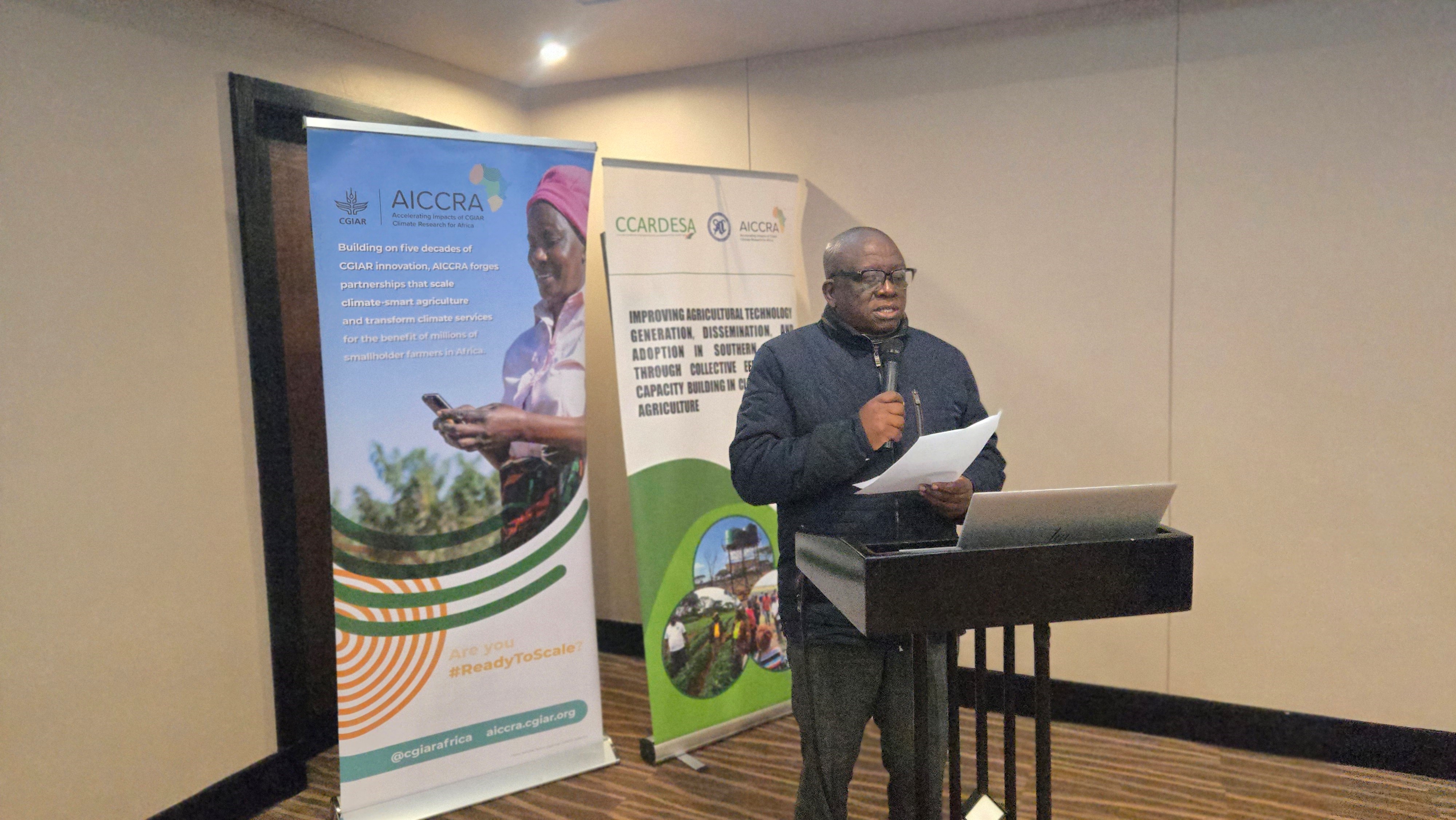
In his opening remarks on behalf of the Permanent Secretary, Mr. Lereko Mashopa, Chief Agricultural Information Officer at the Ministry of Agriculture and Food Security, emphasized the urgency of addressing gender disparities amid intensifying climate shocks. “Climate change is no longer a distant issue. It is an emergency,” he stated. Despite playing leading roles in agriculture, women continue to face multiple challenges, including limited access to land and inadequate irrigation infrastructure, as well as a lack of financial resources and recognition. This meeting is timely and strategic. Let us use it to amplify the remarkable, yet often invisible, work of women.”
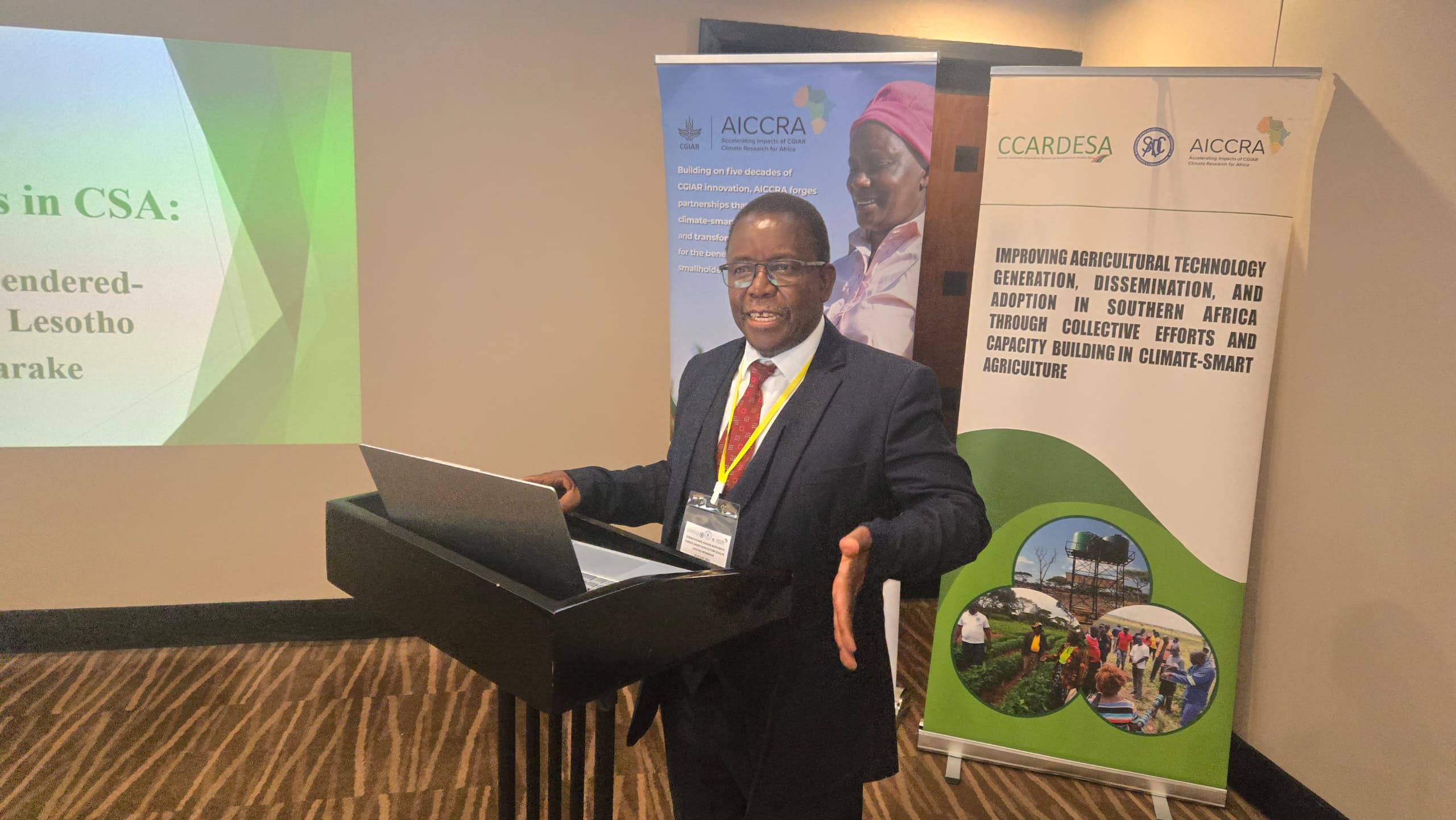
A powerful keynote address by Prof. Makoala V. Maraka from the University of Lesotho exposed the deep gender gaps in agricultural adaptation. He noted that poverty is feminized, with women and girls disproportionately affected by climate-related disasters, caregiving burdens, and exclusion from resource ownership. Prof. Maraka highlighted that in 2010–2011, Lesotho lost 3.6% of its GDP due to floods, which severely impacted agriculture and livestock. Women bore the brunt of these losses, yet their ability to adapt was hampered by limited access to land and financial resources. He called for the revival of indigenous knowledge systems and practical support, such as access to donkeys to reduce the physical burdens women face daily. His reflections sparked robust responses from the audience, with women participants openly affirming his views through testimonies of their lived realities.
A key highlight of the workshop was the facilitation by Dr. John Recha, a climate-smart agriculture and policy scientist from ILRI, who skillfully guided the group sessions. Dr. Recha encouraged women to speak boldly about their challenges and propose solutions, ensuring that their experiences shaped the dialogue. His inclusive approach created a safe space for participants to share openly and sparked energetic feedback and debate during the action planning sessions.
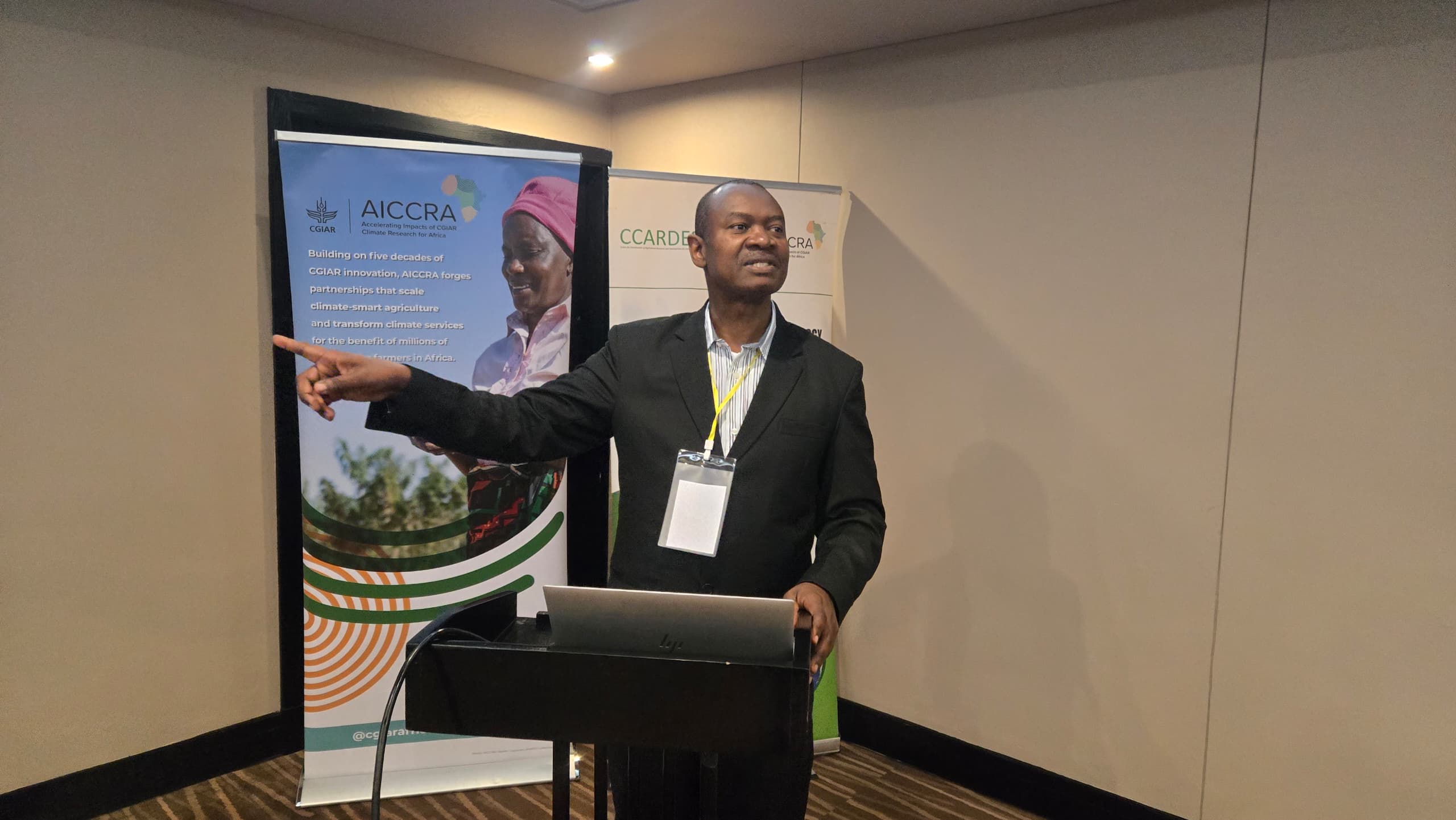
Mr. Suwilanji Sinyangwe from FANRPAN shared the background of the dialogue, framing it within the broader effort to create platforms where gender, climate, and agriculture intersect meaningfully.
Farmers shared practical challenges they face in implementing CSA. One poultry farmer recounted how water scarcity led her to develop a nipple system for water collection and later invest in a borehole. Another described how organic agriculture, particularly through the use of poultry manure, had improved both soil health and crop yields. However, access to finance remains a significant hurdle. Banks often require land for collateral, which many women do not own. Others raised concerns about substandard poultry inputs, delays in supply, and the lack of representation in certification bodies.
Discussions also revealed cultural barriers. A potato farmer shared how local consumers preferred imports from South Africa, while gender norms continue to restrict women’s influence beyond the household. In some cases, women farmers noted that men were more supportive in the field than their female counterparts, while others pointed to a lack of collaboration between men and women. Questions were raised on how current policies support or hinder CSA adoption, particularly for women, and what strategies the government is deploying to ensure inclusivity.
Mrs. Bridget Kakuwa-Kasongamulilo, ICKM Manager, passionately led one of the workshop’s key outcomes: the establishment of a Community of Practice (CoP) comprising eight representatives selected by the delegates. This CoP will take the lead in driving forward the workshop’s action plans, promoting peer learning, and ensuring that women’s voices remain central in the national and regional CSA agenda.
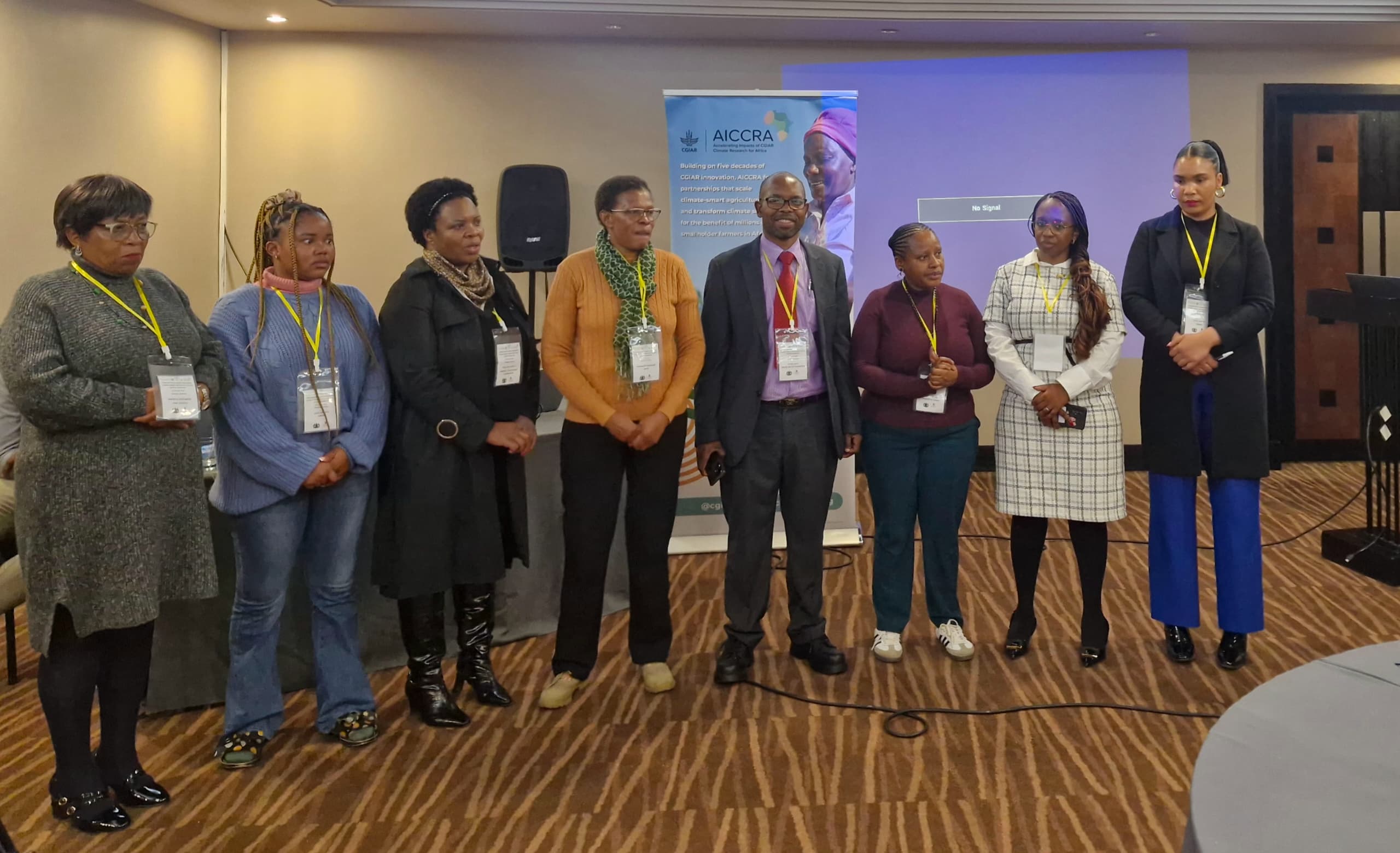
In his closing remarks, Mr. Mashopa reflected on the importance of continued action. “Women and girls are treated as second-class citizens. It is high time that we develop strategies where everyone can participate irrespective of gender,” he said. He thanked participants for their engagement and urged them to take the energy and insights from the workshop back to their workplaces and communities. “Let us ensure that gender-sensitive approaches inform everything we do.”
The workshop will culminate in the production of a detailed report, a gender-focused CSA policy brief, and a media package to disseminate key lessons across the SADC region. As the curtains fell on the two-day gathering, momentum remained strong. Participants left with a shared conviction: that gender equality is not a side conversation but central to building resilient, climate-smart food systems for the future.