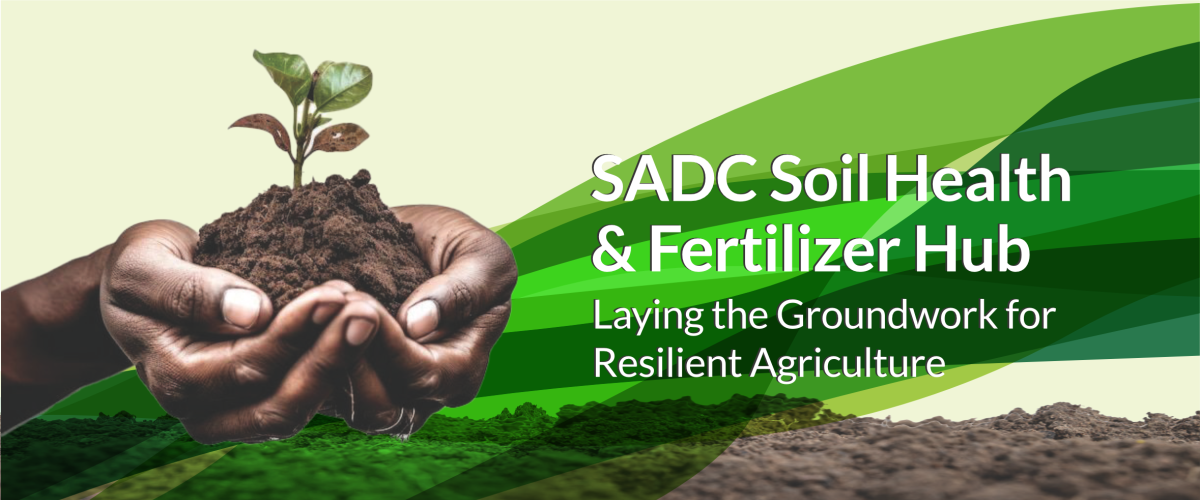
Southern Africa's leading soil health and fertilizer stakeholders have issued a strong call for enhanced coordination of soil health-related investments and interventions across the region, warning that fragmented efforts, overlapping projects, and limited information sharing are undermining the collective impact of investments intended to improve agricultural productivity, food security, and resilience.
The call emerged during the SADC Soil Health and Fertilizer Hub Technical Working Group (TWG) meeting convened virtually on 16 June 2026, bringing together representatives from SADC, CCARDESA, FAO, CGIAR/IITA, AFAP, MwAPATA Institute, AICCRA, national research institutions, and universities to review progress made since the SADC Soil Health and Fertilizer Hub was officially launched a year ago.
Throughout the discussions, one message resonated across all presentations and stakeholder interventions: Southern Africa cannot afford to continue implementing soil health initiatives in silos.
Participants noted that multiple organizations are often undertaking similar interventions within the same countries, collecting comparable data, establishing parallel systems, and engaging the same beneficiaries without adequate coordination. While these efforts are well-intentioned, stakeholders warned that the lack of recognition by stakeholders of the SADC Soil Health and Fertilizer Hub established by SADC Member States and national hubs to offer a structured coordination mechanism risks duplication of investments, inefficient use of resources, and missed opportunities for collaboration and scaling.
The concerns come at a critical time for the region as governments and development partners intensify efforts to implement the Africa Fertilizer and Soil Health Action Plan (AFSH-AP), a continental framework aimed at restoring soil health and transforming agricultural productivity across Africa.
Coordination Recognized as a Strategic Investment
Participants emphasized that coordination should no longer be viewed as an administrative function but rather as a strategic investment capable of significantly increasing the effectiveness of development interventions.
The meeting highlighted examples where different institutions are developing separate soil information systems, conducting similar soil mapping exercises, or implementing overlapping fertilizer and soil health projects in the same countries. Stakeholders agreed that better coordination and recognition of the responsible entity(ies) could reduce duplication, improve interoperability of systems, harmonize approaches, and free up resources for implementation on the ground.
The Food and Agriculture Organization of the United Nations (FAO) underscored the importance of harmonizing soil information systems and strengthening information sharing among institutions, noting that many organizations are collecting similar data while developing independent platforms.
Similarly, the African Fertilizer and Agribusiness Partnership (AFAP) stressed the importance of understanding who is implementing what, where interventions are taking place, and where opportunities exist for synergy and collaboration. AFAP called for comprehensive project inventories and stronger country-led coordination systems capable of tracking investments and guiding resource allocation.
The message was echoed by the MwAPATA Institute of Malawi, which shared country lessons to implementing the African Fertilizer and Soil Health Action Plan. The Institute emphasized that clearly designated leadership, stakeholder mapping, defined governance structures, and coordinated resource mobilization are critical ingredients for success.
CCARDESA Mandated to Lead Regional Coordination
The discussions reinforced the strategic role of the SADC Soil Health and Fertilizer Hub as the region's principal coordination platform.
Established following approval by SADC Ministers responsible for Agriculture, Food Security, Aquaculture and Fisheries in 2025, the Hub was created specifically to serve as the regional mechanism for coordinating soil health and fertilizer interventions, harmonizing policies, supporting implementation of the African Fertilizer and Soil Health Action Plan, strengthening soil information systems, promoting fertilizer quality assurance, and facilitating knowledge sharing across Member States.
As the institution mandated by SADC Ministers to coordinate agricultural research, development and knowledge management initiatives in the region, CCARDESA serves as the Secretariat of the Hub and is uniquely positioned to convene stakeholders, facilitate collaboration, support Member States, and ensure alignment between national, regional and continental priorities.
Participants acknowledged that strengthening the Hub and empowering national coordination structures would provide the region with a practical solution for reducing fragmentation and maximizing the impact of investments.
Importantly, SADC Ministers have already directed partners to recognize both regional and national Soil Health and Fertilizer Hubs as the primary entry points for soil health interventions in order to avoid duplication, promote collaboration, and ensure optimal use of resources.
National Hubs Identified as the Missing Link
A major outcome of the meeting was consensus that National Soil Health and Fertilizer Hubs represent the most effective mechanism for coordinating interventions at country level.
Stakeholders agreed that operational national hubs can provide a platform for bringing together governments, research institutions, development partners, private sector actors, and civil society organizations to jointly plan, coordinate, monitor, and report on soil health investments.
National hubs would also facilitate stakeholder mapping, identify gaps and overlaps, align projects with national priorities, support resource mobilization, and strengthen accountability.
Several countries have already made progress. Support provided through the SADC Soil Health and Fertilizer Hub and other institutions, has contributed to the establishment or advancement of national hub processes in Zambia, Lesotho and Malawi, including the drafting of the Botswana Soil Health and Fertilizer Strategy, while interest is emerging from other Member States.
However, participants noted that significant work remains to operationalize hubs across all SADC countries and ensure they are adequately resourced to fulfil their mandates.
Progress Recorded Despite Resource Constraints
The meeting recognized important achievements recorded during the Hub's first year of operation despite significant funding challenges.
Among the notable milestones were support to Member States in establishing National Soil Health and Fertilizer Hubs, strengthening of soil information systems, promotion of fertilizer quality assurance mechanisms, and expansion of strategic partnerships.
The region has also made progress towards implementation of the SADC Harmonized Fertilizer Regulatory Framework and the Regional Fertilizer and Soil Health Programme, both of which were approved by SADC Ministers as key instruments for implementing the African Fertilizer and Soil Health Action Plan.
Implementation efforts are currently being supported through several partnerships, including the World Bank-funded Food Systems Resilience Program (FSRP), which has provided critical support towards operationalizing the regional coordination agenda and strengthening collaboration among Member States.
A Collective Commitment to Work Together
As the meeting concluded, stakeholders agreed that the future success of soil health and fertilizer interventions in Southern Africa will depend less on the number of projects being implemented and more on how effectively institutions work together.
Participants committed to strengthening collaboration, undertaking regional stakeholder mapping, profiling ongoing projects and investments, clarifying partner roles, mobilizing resources jointly, and supporting the establishment of National Soil Health and Fertilizer Hubs throughout the region.
The message from the Technical Working Group was clear: Southern Africa possesses the expertise, institutions, and partnerships required to transform its soils and agricultural systems. The challenge now is ensuring that these efforts are coordinated, aligned, and mutually reinforcing.
With CCARDESA leading the regional coordination agenda through the SADC Soil Health and Fertilizer Hub, stakeholders expressed confidence that stronger collaboration will help the region avoid duplication, unlock efficiencies, attract greater investment, and accelerate progress towards resilient food systems and sustainable agricultural growth.